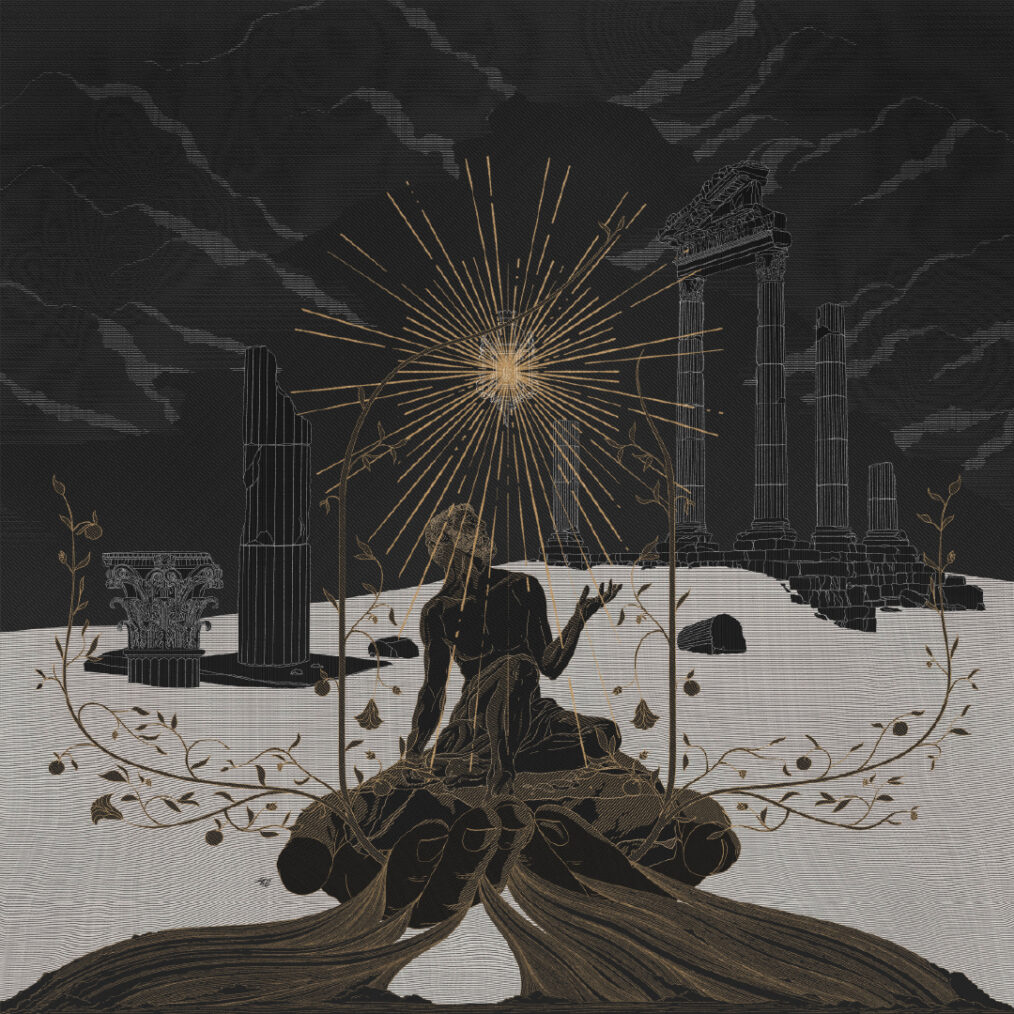
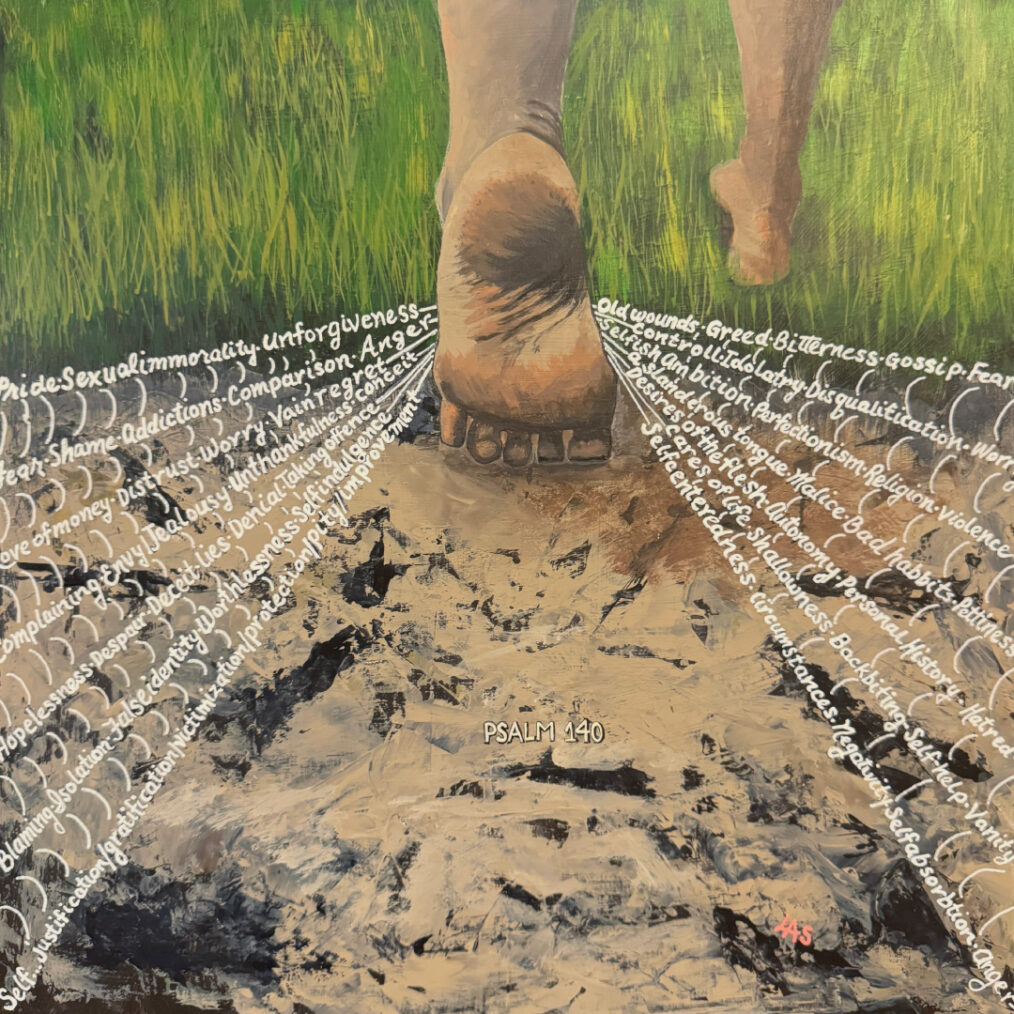
1 Corinthians 8:1–13: Idols & Freedom

The culture of our city has the power to shape us in more ways than we might know. When Christians conform to the desires, values, and practices of their city, it creates real problems in the church. In 1 Corinthians, Paul is writing to a messy church experiencing all sorts of city-shaped problems. To confront these problems, Paul reminds the church of who they are in Christ, and he calls them to live with a Christ-shaped vision for life.

1 Corinthians 7:25–40: Singleness

The culture of our city has the power to shape us in more ways than we might know. When Christians conform to the desires, values, and practices of their city, it creates real problems in the church. In 1 Corinthians, Paul is writing to a messy church experiencing all sorts of city-shaped problems. To confront these problems, Paul reminds the church of who they are in Christ, and he calls them to live with a Christ-shaped vision for life.

1 Corinthians 7:1–24: Marriage & Divorce

The culture of our city has the power to shape us in more ways than we might know. When Christians conform to the desires, values, and practices of their city, it creates real problems in the church. In 1 Corinthians, Paul is writing to a messy church experiencing all sorts of city-shaped problems. To confront these problems, Paul reminds the church of who they are in Christ, and he calls them to live with a Christ-shaped vision for life.

1 Corinthians 6:12–20: Sexuality & the Risen Christ

The culture of our city has the power to shape us in more ways than we might know. When Christians conform to the desires, values, and practices of their city, it creates real problems in the church. In 1 Corinthians, Paul is writing to a messy church experiencing all sorts of city-shaped problems. To confront these problems, Paul reminds the church of who they are in Christ, and he calls them to live with a Christ-shaped vision for life.

Luke 24:13–35: Eastertide & the Road to Emmaus

This morning, we hosted pastor Leonel Pacheco from Fuente de Redención, our partner church in the Iztapalapa borough of Mexico City.

Leonel, his wife Myrna, and their two sons planted Fuente de Redención six years ago. They are “A church centered on the Gospel, growing in our love for Christ, His church, and Iztapalapa.”

With 1.8 million residents, Iztapalapa is the most populous borough of Mexico City. It is also one of the most socioeconomically depressed. Park Church was connected with the Pacheco family about three years ago through the Redeemer City to City network. Learn more at fuentecdmx.com.

Easter Sunday: John 20:1–18

In response to the wonder of Jesus’ resurrection and victory over death and the grave, Easter stands alone as the most joyful, boisterous day we observe each year.

Good Friday: John 18–19

We’ll allow the Scriptures to take us to the scene of our Lord’s betrayal, arrest, trial, crucifixion and burial, setting us up for a deep celebration of Jesus’ resurrection on Easter Sunday.

Holy Saturday Guide

Set apart 10-30 minutes at some point on Saturday to work through this meditation slowly as an individual or household. Have a timer handy for moments of silence.

Read

John 19:38-42

After these things Joseph of Arimathea, who was a disciple of Jesus, but secretly for fear of the Jews, asked Pilate that he might take away the body of Jesus, and Pilate gave him permission. So he came and took away his body. Nicodemus also, who earlier had come to Jesus by night, came bringing a mixture of myrrh and aloes, about seventy-five pounds in weight. So they took the body of Jesus and bound it in linen cloths with the spices, as is the burial custom of the Jews. Now in the place where he was crucified there was a garden, and in the garden a new tomb in which no one had yet been laid. So because of the Jewish day of Preparation, since the tomb was close at hand, they laid Jesus there.

Reflect

Holy Saturday. A day we often miss entirely. In our flurry and hurry of preparation to ready ourselves for the celebration of Easter morning, we forget that there was an entire 24-hour day in between the horrors of Good Friday and the joys of Easter. More than a full day between death and life. Between the last exhale and the next inhale. A full day between the darkness of despair and the dawn of new hope.

We already know the full story, so it’s easy enough for us to skip straight to the “happy ending.” That feels more comfortable and much less awkward to us, especially in this day and age. And, if we’re honest, this is what we’re tempted to do with all of our problems, griefs and “little deaths” we experience during our time on earth. We tell ourselves, “everything will be fine in the end!” We push down our discomfort and sadness, jumping straight to an optimistic perspective. We find silver linings. We sugar-coat. We strive to turn our situation around as quickly as possible, and if that doesn’t succeed, we often try to escape, or medicate, or numb ourselves from feeling the pain. These are considered normal reactions in our broken world.

But is it how God intended us to live?

Why would God allow for an entire day between Good Friday and Easter? Is it “productive?” What good does it do us? What good did it do the disciples? Couldn’t Jesus have risen on Holy Saturday? Or, for that matter, immediately after being crucified? Why did He make the disciples wait till the third day?

It seems that, through some great mystery, God chose to use the waiting and silence of Holy Saturday for some deeper meaning and purpose. God’s thoughts are not our thoughts, His ways are not our ways, and His timing is not our timing. It wasn’t Abraham’s timing, waiting for a promised child. It wasn’t Job’s timing, waiting for his family to be restored. And it wasn’t the disciples’ timing, waiting for the coming Kingdom and the resurrection.

So how do we approach these “confusing in-betweens” with appropriate health and faith? Have you ever considered how Jesus, the only perfect human to ever live, wept over the death of His friend Lazarus? He took real time to feel sadness and grief even though He knew He would resurrect Lazarus from the dead within a few hours! Jesus models time and time again that we are made as humans to slow down, to allow ourselves to feel emotions before God, and to wait for God to move in His timing.

On Holy Saturday we remember this most painfully confusing “in-between” that the disciples faced millenia ago. But we also recognize that each of us are facing our own “in-betweens” right now, as we wait for God to answer our prayers and ultimately redeem all things. We might be waiting for God to heal a disease or an emotional grief. We might be waiting for reconciliation with a friend or family member. We might be struggling with the recent loss of a life, a home, or a career. We may deeply desire a new relationship or a new chapter in life. We may be waiting for God to pull us out of a “dark night of the soul.” When we slow down, we may even simply feel the weight of the world’s brokenness and our longing for Christ to make all things new.

Yet, through each of these Holy Saturdays we live through, we are not alone. We find ourselves in the company of all who walked with Jesus before us, and even more preciously, we find ourselves in the very presence of our kind Savior who gave up His life for you and me. He who once lay still and breathless in the belly of a cold tomb now sits with us here in this moment.

SILENCE & STILLNESS

Right now, take a few moments to think about one or two “in-betweens” you’re experiencing, whether great or small. As they come to mind, allow yourself to feel sadness over your unmet longings. Silently ask God to fulfill these longings, even if you’ve asked countless times before.

Then, if possible, set a timer for 2-5 minutes to sit in silence and stillness before God. Remember that He is with you. Recognize that He also weeps with you over the “in-betweens.” Allow His presence with you now to bring comfort.

READ

“Holy Saturday” Written by Brent Summers, 2021

A threshold, and an open door,
A pause in sacred time,
Remembering what came before,
To know a plan sublime;
Suspended now ‘tween darkest day
And brightest dawn e’er known,
Our thoughts, unsettled as we pray,
Come to the heav’nly throne.
Today we wait expectantly,
In stillness look again
For patience and humility
As we trust alone in Him.
And in reflections through the day
Our hearts remain steadfast,
For Jesus is our hope and stay,
His love is unsurpassed.

So now we rest and contemplate
The fearful price He paid,
Too soon to join and celebrate;
A tension must be weighed;
To feel the somber gravity,
The solemn call is heard,
With rumors rustling in the breeze,
Profound in ev’ry word.
These liminal reflections bring
A wisdom as we pray,
Will deepen life in everything,
Give meaning to the day.
Oh God, give us the wherewithal
To wait and trust and cope
With passing time that sometimes crawls
Please fill our hearts with hope.

DISCUSS & REFLECT

  • What stood out to you from these readings?
  • What is God stirring in your heart today?

PRAY

O God, Creator of heaven and earth: Grant that, as the crucified body of your dear Son was laid in the tomb and rested on this holy Sabbath, so we may await with him the coming of the third day, and rise with him to newness of life; who now lives and reigns with you and the Holy Spirit, one God, for ever and ever. Amen. -Book of Common Prayer

END IN SILENCE

Again, set a timer for 2-5 minutes, then sit in silence and stillness before God.

Maundy Thursday Guide

WHAT IS MAUNDY THURSDAY?

Maundy Thursday is the Thursday before Good Friday. It marks the final night that Jesus gathered with His disciples before His crucifixion. On that night He explained the meaning of His death through a modified passover feast, He gave some of his final teachings, and He washed the feet of His disciples teaching them a “new commandment”—to love one another just as He has loved us.

Traditionally, the church has gathered on this night to remember the Lord’s Last Supper and His commandment (latin: mandatum) to “love one another.” We do this by reading Scripture, praying, sharing a meal, and celebrating communion. This is a night of both remembrance and preparation. We slow down on Thursday night to remember the love of Jesus our Suffering Servant, and we prepare our hearts to feel both the sorrow and the gratitude that should particularly mark Good Friday.

WHAT SHOULD WE DO?

READ & PRAY

Prior to the meal, read aloud John 13:1-20 and 33-35. Then take a few minutes to pray around these themes:

  • Give thanks for the death and resurrection of Jesus, and the real life community borne in this death and resurrection and seen gathered.
  • Ask for help to remember and give weight to the events that this weekend memorializes.
  • Ask for help to believe that the death and resurrection of Jesus really grants all that the New Testament claims (forgiveness, adoption, union with Jesus, and new life).
  • Pray that God would move through our time together on Friday night and Sunday to help us believe and celebrate all that God has given us in the death and resurrection of Jesus.

EAT & DISCUSS

Share a meal together, discussing the importance of Holy Week. Here are some questions that may help spur on conversation:

  • What is the significance of Jesus’ triumphal entry (Palm Sunday)? How was the way in which Jesus the king presented himself surprising to people? How is it surprising and/or difficult to accept for you?
  • What took place during the Last Supper? What do we learn about the character of Jesus from that evening? How does this bring joy to you? How is it challenging?
  • Why were the events of Good Friday necessary? For what reasons do you think it is hard for us to consider sin and its consequences? How do we see the glory of God in the crucifixion?
  • What might prevent us from deep and full celebration on Easter Sunday? In what ways does Easter inspire joy, comfort, and hope? What are ways you can prepare your heart for Good Friday and Easter Sunday?


CELEBRATE THE LORD’S SUPPER

On the night before His death, Jesus taught His disciples the meaning of His death through a modified passover meal that He instituted as a perpetual reminder for all who would follow Him. While celebrating Communion weekly in our gathered worship is a vital practice for our church, celebrating in homes with smaller communities can also be a powerful practice that can help us remember and celebrate what Jesus did for us on the cross. Here are the basic elements involved in celebrating Communion with your community:

  • Prepare: To celebrate Communion, you will need wine, grape juice, and bread.
  • Remind: Remind your community that we are truly grateful for everyone who is present, but that Communion is a covenant meal that is intended for followers of Jesus.
  • Read: Ask someone read 1 Corinthians 11:23-26.
  • Serve: Ask two people to serve Communion by offering the bread and the cup, saying:
    • “The Body of Christ, broken for you.”
    • “The Blood of Christ, shed for you.”
  • Sing (Optional): You can sing a simple and well-known hymn like The Doxology.
  • Pray: Ask someone close in prayer, thanking Jesus for the love that He has shown us through His sacrificial death on the cross.

PREPARE FOR GOOD FRIDAY

Give some instructions in preparation for Good Friday. Our Good Friday service is very different from what many people have experienced. Encourage your community to arrive early. The service is very dark and is a service of remembrance and mourning. We will read together through the last hours of Jesus’ arrest, trial, and crucifixion. We will sing about the cross. At the end, we will – in silence and darkness – receive the Lord’s Supper and leave.

For many the service is a disorienting one. It is designed to break us from the banality of much of our lives, immerse us in the gravity and sadness that marks Good Friday, and stir in us a longing to see the fruit of this night on Easter. The closing silence is particularly poignant for people as we ask that the whole congregation leave the building and parking lot in silence. Pray for this night. Pray that the Gospel would be clear. Pray that non-Christians, on Good Friday and Easter, would be given faith to believe.