
Psalm 19—Artwork

Learn more about Christ in the Psalms weekly artwork and see previous pieces here.

Madelyn Houser

About the Artist • About the Piece

A lifelong reader of poetry, I started writing poetry ten years ago while studying math in grad school. I was really interested in how mathematical rules could impose constraints upon literature that led to more creativity rather than less. I consider myself a hobby poet and was intimidated to join Project 101010, however the community and creativity of the project was a true blessing and I can’t wait to journey (again!) through Psalm 11-20 this summer.

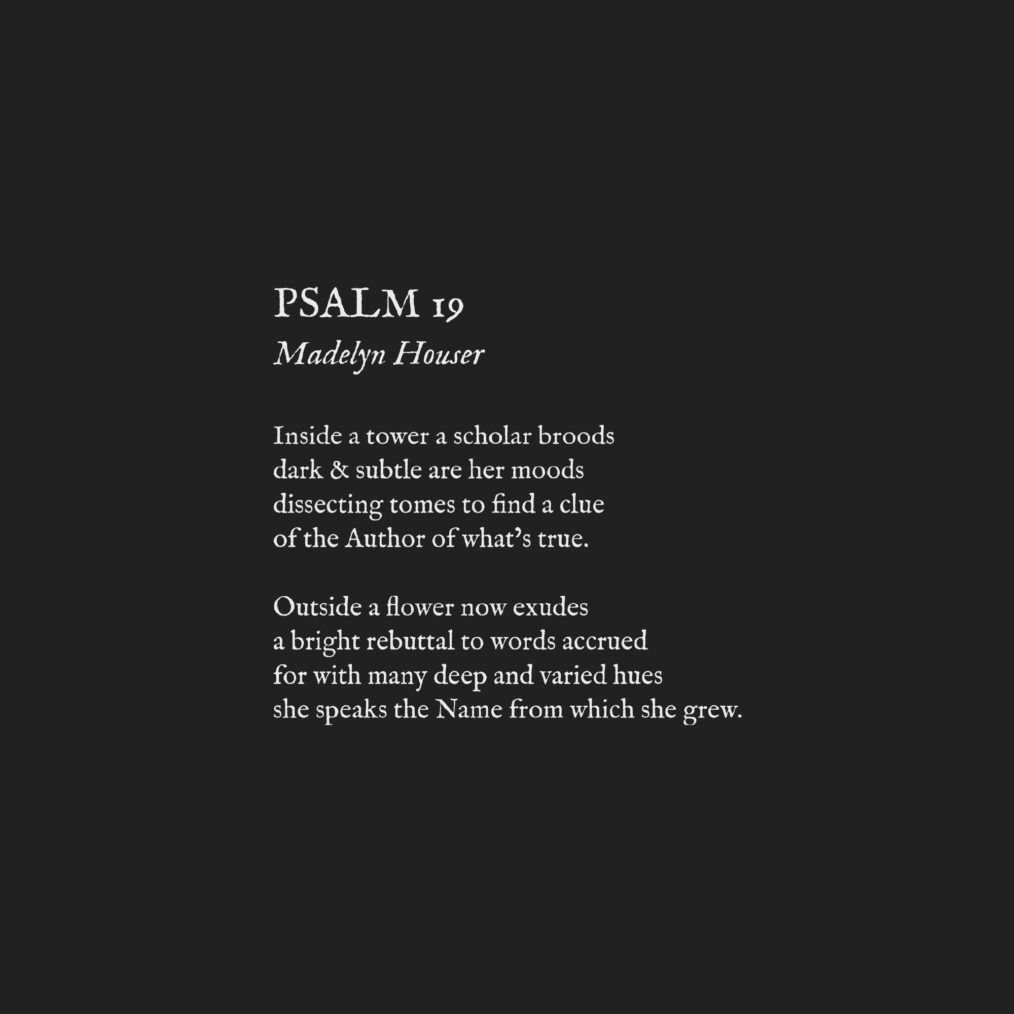
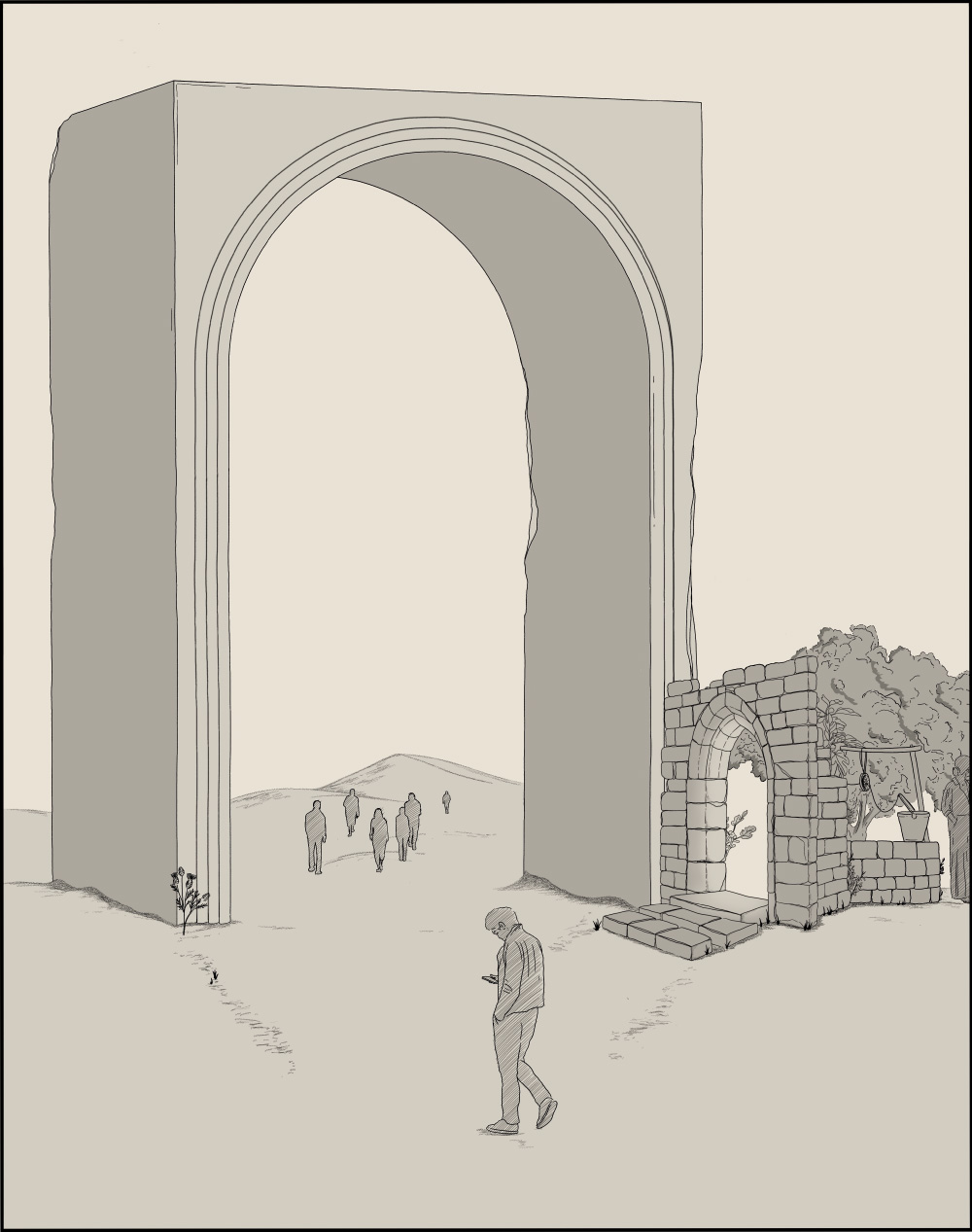
While meditating on Psalm 19, I was really struck with how innately creation praises God in verses one through six. The strutting sun, the declaring heavens! I wanted to contrast my own human struggle to know God with nature’s inherent understanding of its own creaturehood. The first stanza is a self reflection depicting my spiritual intellectualizing, seeking to know of and about God without the vulnerability of an embodied living relationship with God. The scholar searches for ‘a clue’ rather than God himself and the dim setting reflects the spiritual darkness of such endeavors. The tower represents my own pursuits to be like God (Babel) as well as my self-imposed distance from the rest of creaturehood. The second stanza takes place outside and is meant to be bright and cheery to reflect the light (of Christ) that nourishes the flower. I chose a flower to represent nature as a whole both because of its rootedness as well as its ephemeral essence highlighted by the more staccato cadence of the words. The mirrored rhyming of each stanza connects the two experiences of both creatures while the inside/outside framing positions those experiences as stark opposites. The scholar is immersed in ‘tomes’ of words but is ultimately disconnected from her own author and unable to recognize his voice while the flower is so rooted in God she is able to speak volumes of the character and identity of her Creator without the need for words.

Psalm 18—Artwork

Learn more about Christ in the Psalms weekly artwork and see previous pieces here.

Myra Ferguson

About the Artist • About the Piece

Myra Ferguson is a digital media educator, author, and freelance designer/developer. She teaches at the University of Colorado-Boulder.

After writing How to Cheat in Adobe Animate CC, Myra authored video courses, wrote Linkedln Skill Assessments and the Adobe Certified Instructor Exam for Design and Layout, and worked with the Adobe Learn team to improve content discoverability. Myra also creates video tutorials and writes articles for CreativePro to help Adobe users learn a variety of Creative Cloud applications.

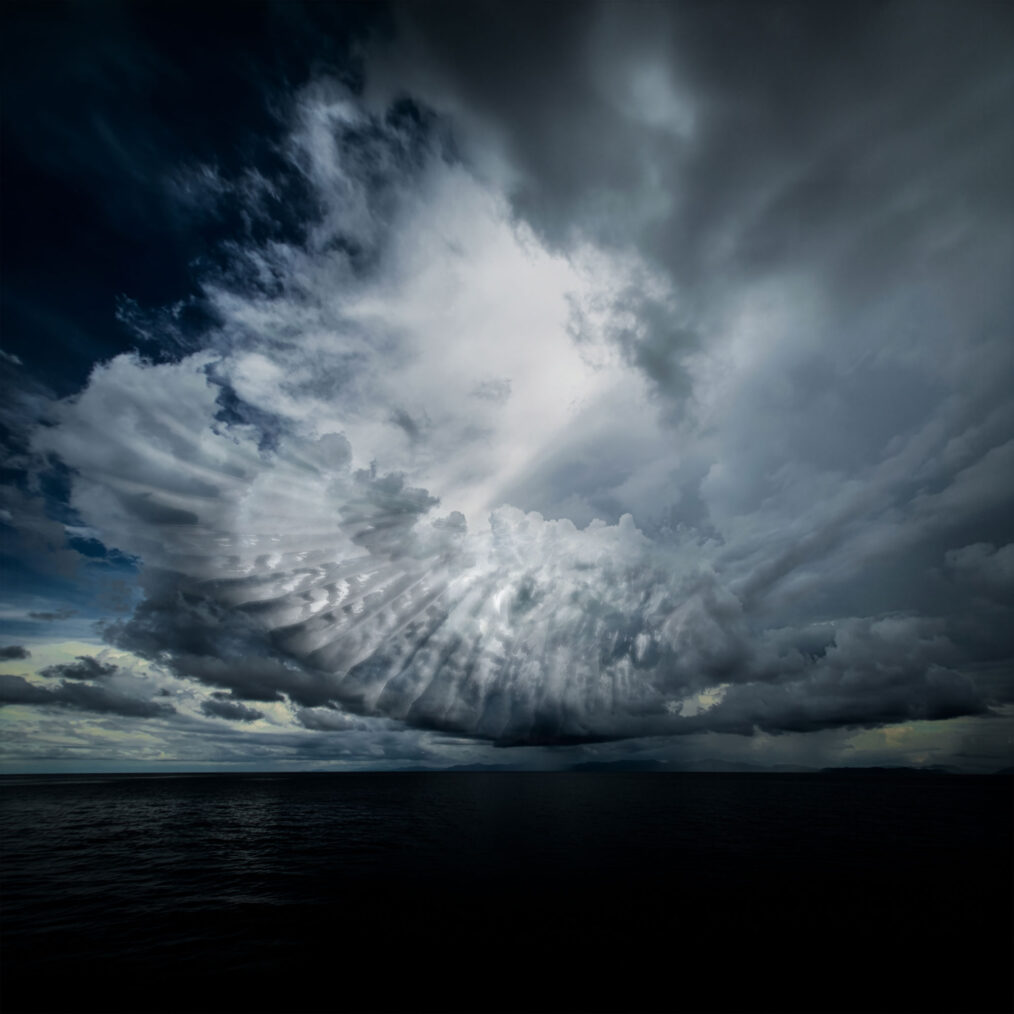
Psalm 18:10b-18:11 describes God responding to David’s distress call as “he came swiftly on the wings of the wind. He made darkness his covering, his canopy around him, thick clouds dark with water.” The preceding verses paint a picture of God’s wrath towards David’s enemies, so I envisioned angry skies and wondered how a wing might be a part of that.

I started with an Adobe Stock image that showed a fierce storm forming over water. The shape of the shelf cloud resembled a wing, so looked for another stock image with a bird that had a similar wing shape.

I found an image of a golden eagle. Using an image of a wing from a golden eagle seemed appropriate, as it’s one of the largest birds of prey in North America. Birds of prey generally symbolize power and precision and are often associated with the idea of being a divine messenger.

I combined the two images in Photoshop, rotating the wing to match the orientation of the cloud. I used adjustment layers to desaturate the wing and lighten it. I applied a layer mask to blend the feathers into the clouds. And I applied the Screen blend mode to lighten the wing shape over the clouds. Lastly, I flipped the entire image horizontally to make what would be the “front” face the right to set the direction of the motion as if we were reading it from left to right.

Psalm 17—Artwork

Learn more about Christ in the Psalms weekly artwork and see previous pieces here.

Tamara Carey

About the Artist • About the Piece

The older I get, the more stunned I am by the completely undeserved gift of God calling me His child. That’s who I am… as my best friend’s bride, our three children’s mama and teacher, and friends’ and neighbors’ eager listener. I seek to behold His glory daily, so that He might transform me from one degree of glory to another. I am kept, as this Psalmist prays, by Him.

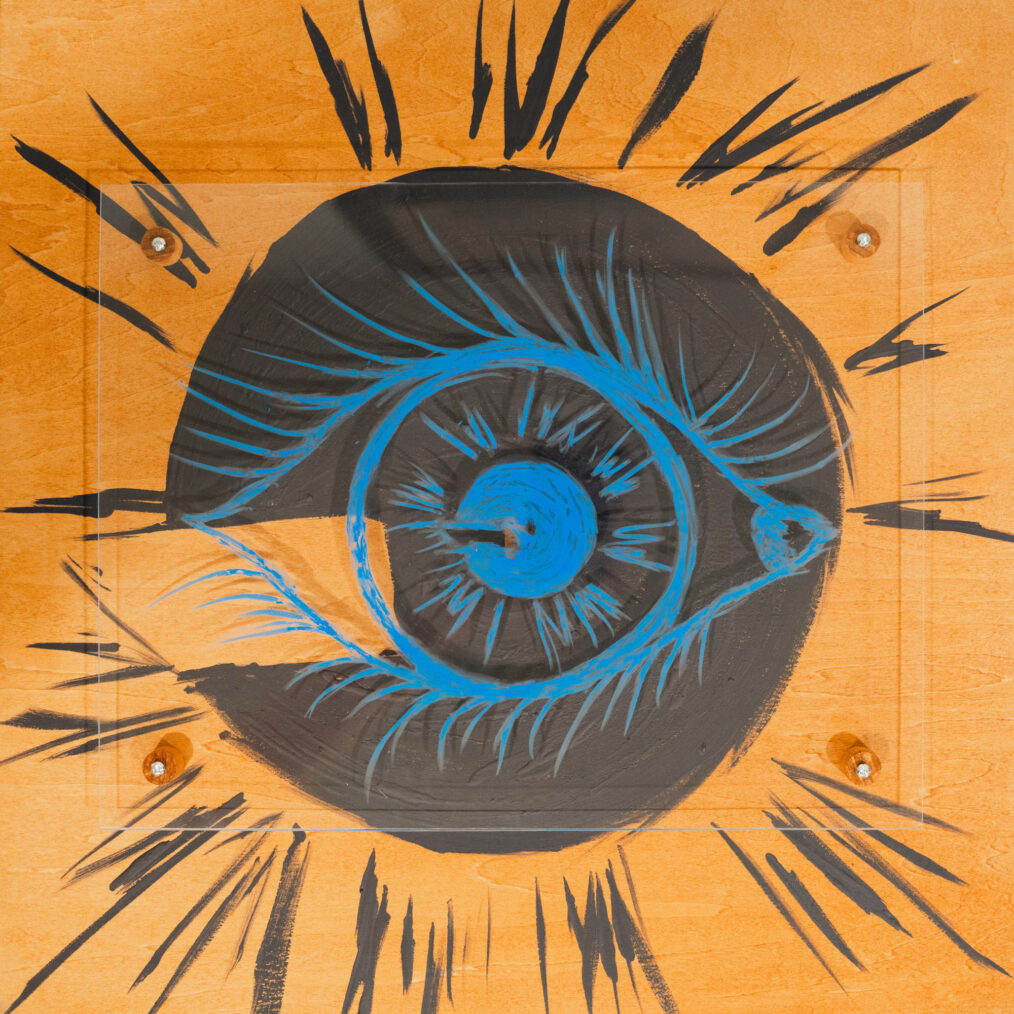
I tell my children, “There is only one perfect Artist… we simply get to copy what He has already made.” What a privilege it is to read His Word, observe His world, and then create! In Psalm 17, the writer’s plea is for God to listen to his cries, to protect him, and to act on his behalf to deliver him from his enemies. What stood out to me was verse 8, in the middle of His yearning for God’s protection: Keep me as the apple of Your eye… The Hebrew word for the phrase “as the apple” is pronounced ‘îšôn, which means pupil – the darkest, most vulnerable and protected part of the eye. I used oil pastels on the back of the transparent window to capture a rough sketch of the whole eye. The pupil, however, is the main part of this piece. It lies behind the glass – protected. I used a deep blue, for the pupil is like a window into waters of the soul that flow deep within. I hope this encourages us to pray, knowing that God knows and protects us more than we could ever fathom.

Psalm 16—Artwork

Learn more about Christ in the Psalms weekly artwork and see previous pieces here.

Whitney Grimm

About the Artist • About the Piece

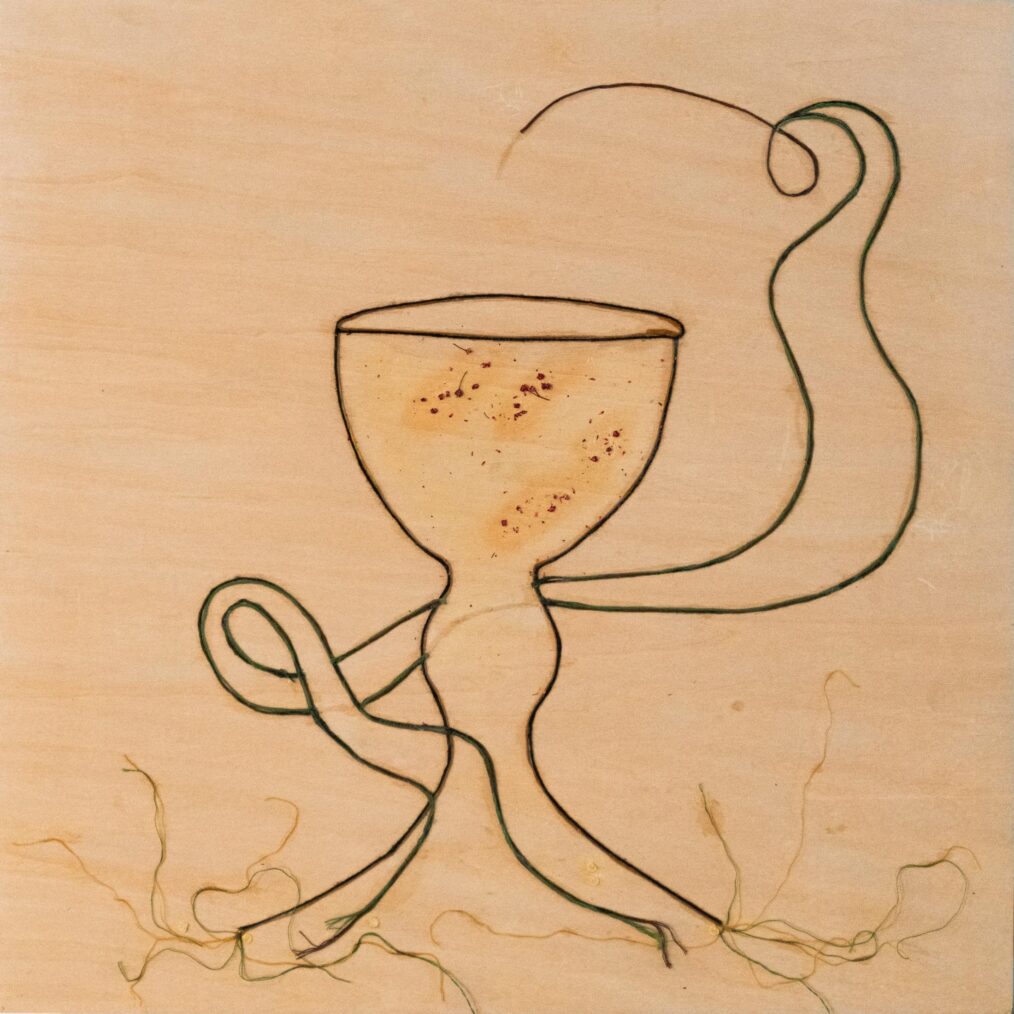
It’s a privilege, yet again, to be able to create an art piece for CITP, Psalm 16. Because art is subjective, my desire in all the art I create is to tell a story by evoking emotions and feelings, or causing one to stop and think; to ask themselves what they get from it, if anything. Jesus spoke in parables or metaphors, similar to what I could be saying through this piece.

For this piece specifically, each item represents something that I felt was significant in expressing what the themes of this Psalm are. My style is clean, minimal and often simple. David knows God is his/our cup of life (v5). He also says God will show him/us the path of life which leads to God (v11). While here on earth we’re meant to grow in Him, rooting ourselves in Him and His Holy Word.

Psalm 15—Artwork

Learn more about Christ in the Psalms weekly artwork and see previous pieces here.

Kate Turner

About the Artist • About the Piece

Kate Turner is a brand designer and illustrator at STONE Strategy and Design in Golden, Colorado. Beyond her creative work, she finds joy in snowboarding, history podcasts, figure skating, and serving on Sundays as “Miss Kate” with Park Kids.

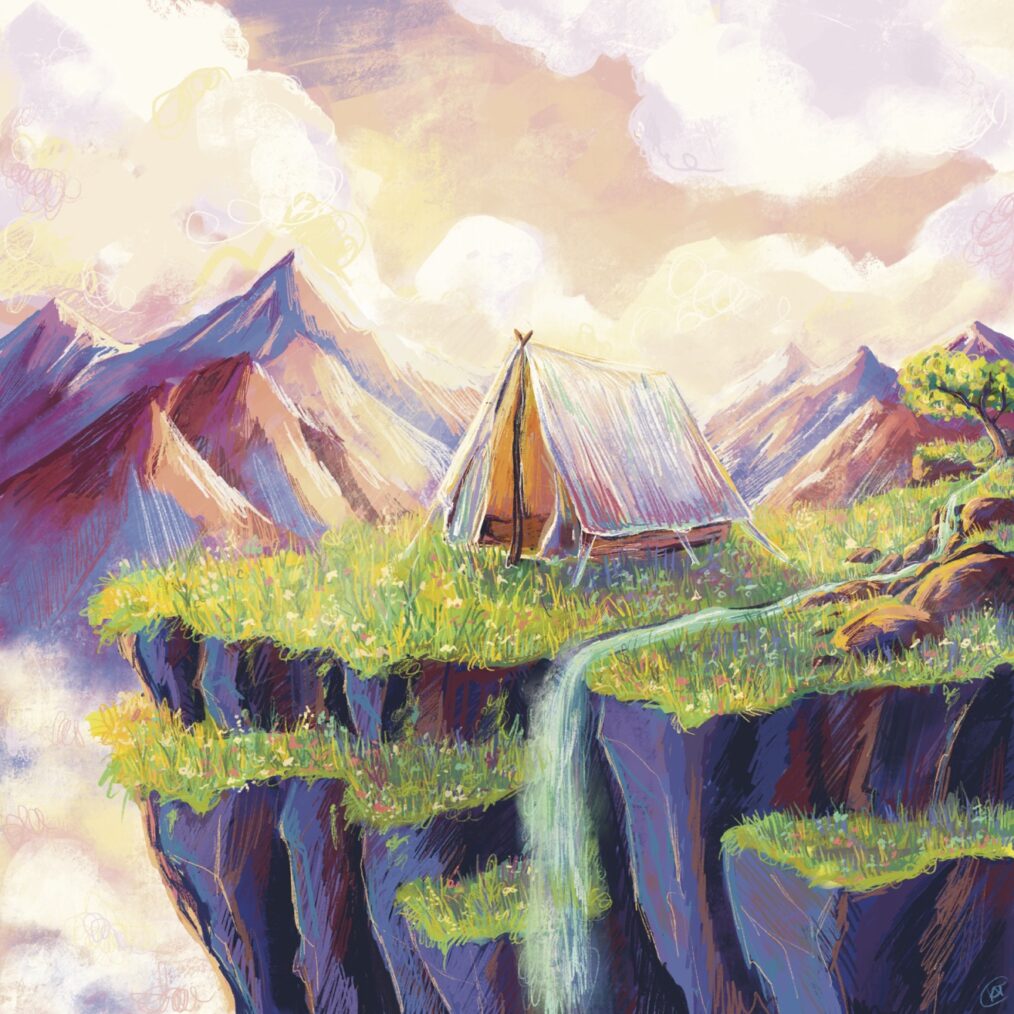
When I first read Psalm 15, I kept returning to David’s question: “Lord, who can dwell in your tent? Who can live on your holy mountain?” This question became the foundation for this piece. In both Scripture and my artwork, the tent and mountain symbolize the meeting place of heaven and earth, where God opens His sacred presence through Jesus Christ. Scripture often depicts mountains as places where people encounter God. Even Eden was a garden oasis atop a mountain, where God and man lived together. As the story unfolds, humanity is separated from its home, and Psalm 15 poses a sobering question: Is there anyone who can truly dwell on God’s holy mountain again? Abraham, Moses, Elijah, David, and others ascend mountains to meet God, but none can remain there. The greatest leaders, prophets, kings, and intercessors fall short. Their lives foreshadow the one who would truly fulfill the righteous life described in this Psalm: Jesus. He endured temptation on a mountain, remained faithful through every test, and ultimately gave up his life. Just as the morning dawned on the third day, the beams of light over the mountains represent the hope that humanity will dwell with God again. Similarly, the tent at the center of my piece reminds us that God desires intimacy, not grand architecture. In 2 Samuel 7, He tells David of His willingness to dwell in a humble tent that traveled with His wandering people rather than in a permanent palace. The tent’s front pole is meant to be a carved branch from the tree on the hill, symbolizing Jesus opening access to the “Holy of Holies” through His death on the cross. From this Tree of Life flows a bubbling stream, echoing themes from Genesis and Revelation. As the water pours over the cliff, it becomes a symbol of God’s mercies and life flowing from mountain heights into our world.

Psalm 14—Artwork

Learn more about Christ in the Psalms weekly artwork and see previous pieces here.

Kimberly Kelly

About the Artist • About the Piece

My name is Kim. My husband, Peter, and I have been at Park for 11 years. I’m a mom to the two coolest people I know, a therapist, and an amateur art maker. Art allows me to let go of perfectionism and enjoy the process.

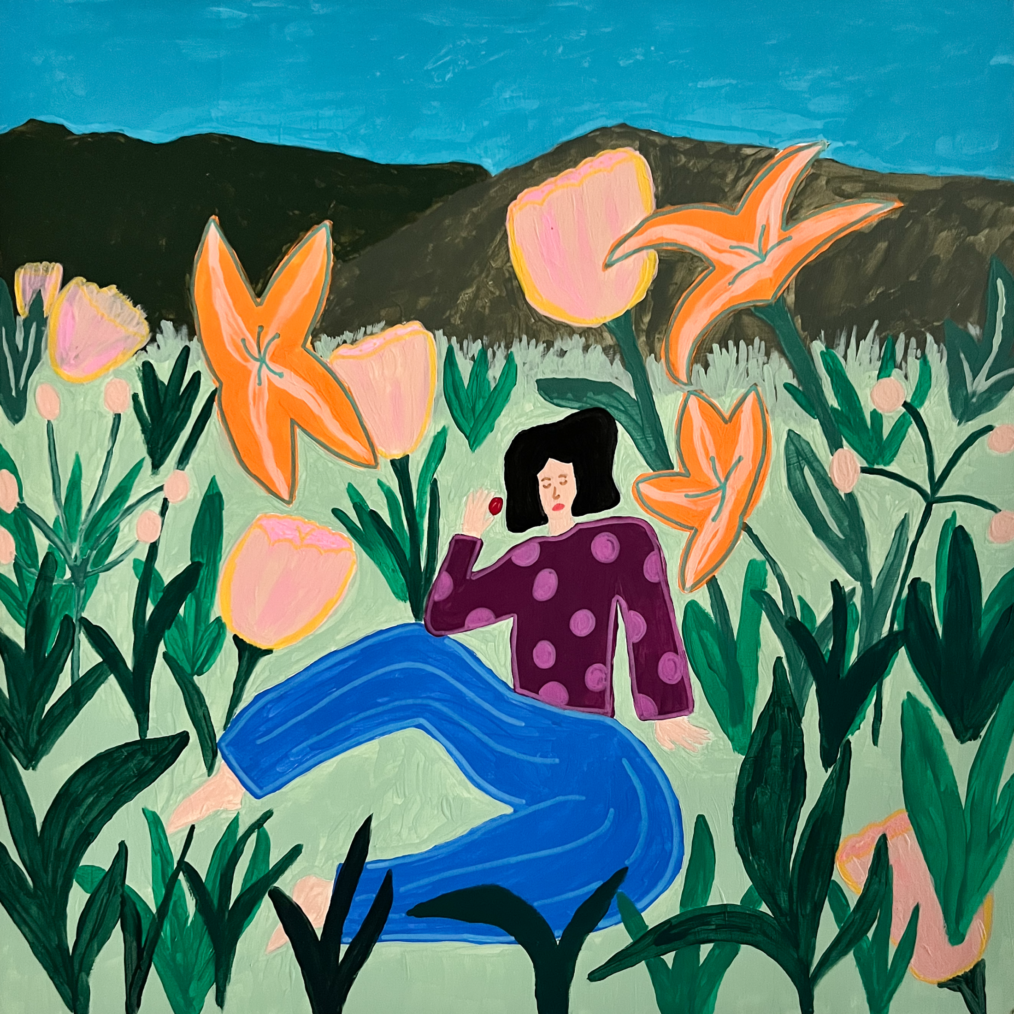
My kids’ Bible (CSB) has this psalm titled “portrait of a sinner.” As I was meditating on this passage, I couldn’t get the idea of this as a self-portrait of sorts out of my head. I think it’s too easy to read this psalm and want to minimize its truth. I’m no fool! I’m not like the person described here…except too often I am. This psalm has encouraged me to confront the foolishness in my life and heart—the ways I proclaim “of course there’s a God” with my words but don’t live like I believe that to be true. With that idea in mind, I intentionally played with proportions to highlight the foolishness and absurdity of where our lives are often oriented when the glory of God is so tangibly on display around us. My hope is that this Psalm would encourage us to examine our own foolishness and return to the God of grace who promises to be our refuge.

Psalm 13—Artwork

Learn more about Christ in the Psalms weekly artwork and see previous pieces here.

Kara Schorstein

About the Artist • About the Piece

I’m a semi-retired visual artist but have also dabbled in songwriting since I was a teen. My dad was a pastor most of my childhood which was spent in Abilene, Texas. We visited Colorado on a vacation in 1969, and I fell in love with the Rocky Mountains. I escaped Texas when I was 45!

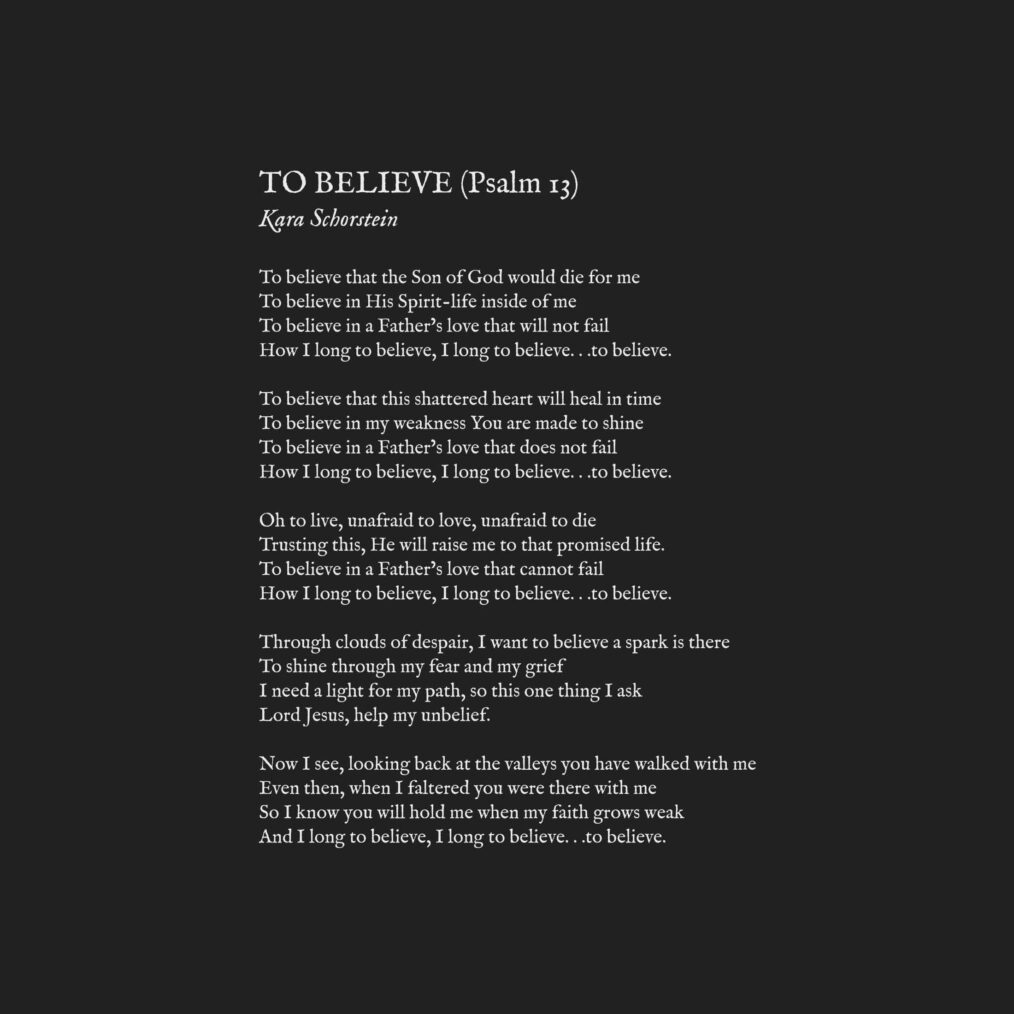
I loved my parents (who have passed), but they were extremely rigid in their expectations of me and my four siblings when we were young. Because of this, I have struggled my whole life to think of God as a loving Father. My husband—the best man I’ve ever known—was the worship pastor at a church in Estes Park. He passed away in our fifth year there. “To Believe” was written/begun there and finished recently when I received the invitation from Seth to participate in the art and writing for this summer’s Psalms series. I’m still working to understand and embrace the impact of God being my father, but He has brought me to a point in my walk with Him where I firmly believe in His love, affection, and grace for me.

Psalm 12—Artwork

Learn more about Christ in the Psalms weekly artwork and see previous pieces here.

Allee Nesbitt

About the Artist • About the Piece

I’m Allee. I do creative direction, design, and branding for an urban planning company based out of San Francisco, CA. I’ve been attending Park Church since 2016. Park is where I met my husband, Cody, and now we have two little guys who make life very fun (2.5 years and 3 months). Life these days is mostly a mix of toddler negotiations, baby snuggles, and reheated coffee.

This design is inspired by Psalm 12, a lament for a world overflowing with noise, division, performance, and fractured truth. When I read this psalm, it felt deeply connected to the world we live in today. It can feel easy to get swept into outrage, fear, and the pressure to choose sides rather than remain grounded in the steady truth of who God is. I often find myself caught between seeking approval from others and resting in the truth of who God says I am. In Psalm 12, God’s words are described as “pure words, like silver refined seven times” — untouched by sin, steady in love, and completely trustworthy.

The hands throughout the piece represent desperation, prayer, surrender, and the longing to reach toward God in the midst of confusion. The snake, scale, eye, and hourglass symbolize deception, imbalance, spiritual exhaustion, and the slow erosion of trust that can happen when we are shaped more by the world’s division than by Christ’s love and truth. In contrast, the silver, sun, and window reflect refinement, guidance, hope, and the steadiness of God’s presence. Together, these symbols point back to the heart of Psalm 12: a reminder that even in a fractured world, God’s truth remains pure, faithful, and worthy of our trust.

Psalm 11—Artwork

Learn more about Christ in the Psalms weekly artwork and see previous pieces here.

Chase Hoffman

About the Artist • About the Piece

I was born and raised here in Colorado. I was briefly an engineer before switching careers to photography. I’ve been doing photography professionally for 16 years across several specialties like portraiture, sports, wildlife, landscape, and real estate. My wife and I have been attending Park Church for 11 years. I’m also a father of two energetic boys, Clark and Devin.

The first sentence of Psalm 11 “In the Lord, I take refuge” is the focus of my piece. David is told to “flee like a bird to your mountain” so I chose to embody David as this red-winged blackbird. The wicked in this psalm are intent on violence toward David yet The Lord is his refuge. A refuge isn’t merely a place away from danger, but a place where one can be calm and be assured of salvation. Just like how this bush shelters this bird from predators and the elements, God shelters David and he shelters us.

There is no need to flee, but to remain with God. The artistic process of exploring theological concepts in photography is like a real-world scavenger’s hunt for God’s goodness. Obviously I “make” my art, but unlike other art forms it’s only through real moments that happen around me. That requires a mental shift and stillness to help me find those fleeting moments and then actually capture them. When I found this bird, I was able to sit down on the ground and take my time dialing in my camera’s settings. The two of us actually stayed put together for several minutes. It was clearly aware of me (probably ten feet away), but didn’t feel the need to flee. I was the one that left first after getting more than enough images.

Eastertide Reflections & James 1, Part II

In this second episode of our relaunched podcast, we visit realism and hope, childlike faith and adult realities, hearing and speaking, and even the Easter Bunny. Join us as Bailey T. Hurley interviews Gary McQuinn on Eastertide and the second half of James chapter one.

Welcome to the Park Church Podcast, where Sunday’s teaching doesn’t stop at the church doors. We’re here to take the big ideas of faith and walk them right into the heart of everyday discipleship. Each episode digs deeper into Scripture with clarity, engages the world we actually live in, and offers practical wisdom for following Jesus in real life: work and family, relationships and anxiety, suffering; the questions you’re already wrestling with. Think of it as the place where our sermon series keeps the conversation going, where our pastoral team engages the questions you are already asking, and where formation grows legs for the week ahead. This is the Park Church podcast, helping you walk in the way of Jesus every day.

Where to Listen

SpotifyAppleYouTube