Echoes of a Voice: Artwork

This year, our Advent series at Park Church is called Echoes of a Voice. If you’ve seen the photography in the building, on the livestream, on Instagram, or in your Advent Guide, you’ve probably asked yourself, “what is this about?” or “what’s the connection?”

First, we want to introduce you to John Forney. John and his family have been at Park Church for several years. He’s a self-taught black and white film photographer, working with vintage 8×10 cameras in large and medium formats. For Christ in the Psalms 2020, John shared an incredible photograph in support of our Psalm 104 week. After digging deeper into his work, we reached out about John’s What Remains? series as an artistic vision for Echoes of a Voice.

First, John is going to tell the story of What Remains? Next, we’ll share about its connection to Advent this year at Park Church.

What Remains?

by John Forney

I began this project about 17 years ago as a novice photographer without any real experience. I was looking for an approach to combine my outdoor interests and my photography interests in a way that wouldn’t necessarily create more “landscape photography.” I was mostly aware of what I didn’t want (traditional landscapes), but I thought maybe ghost towns could provide an opportunity to explore and work out some sort of photographic vision.
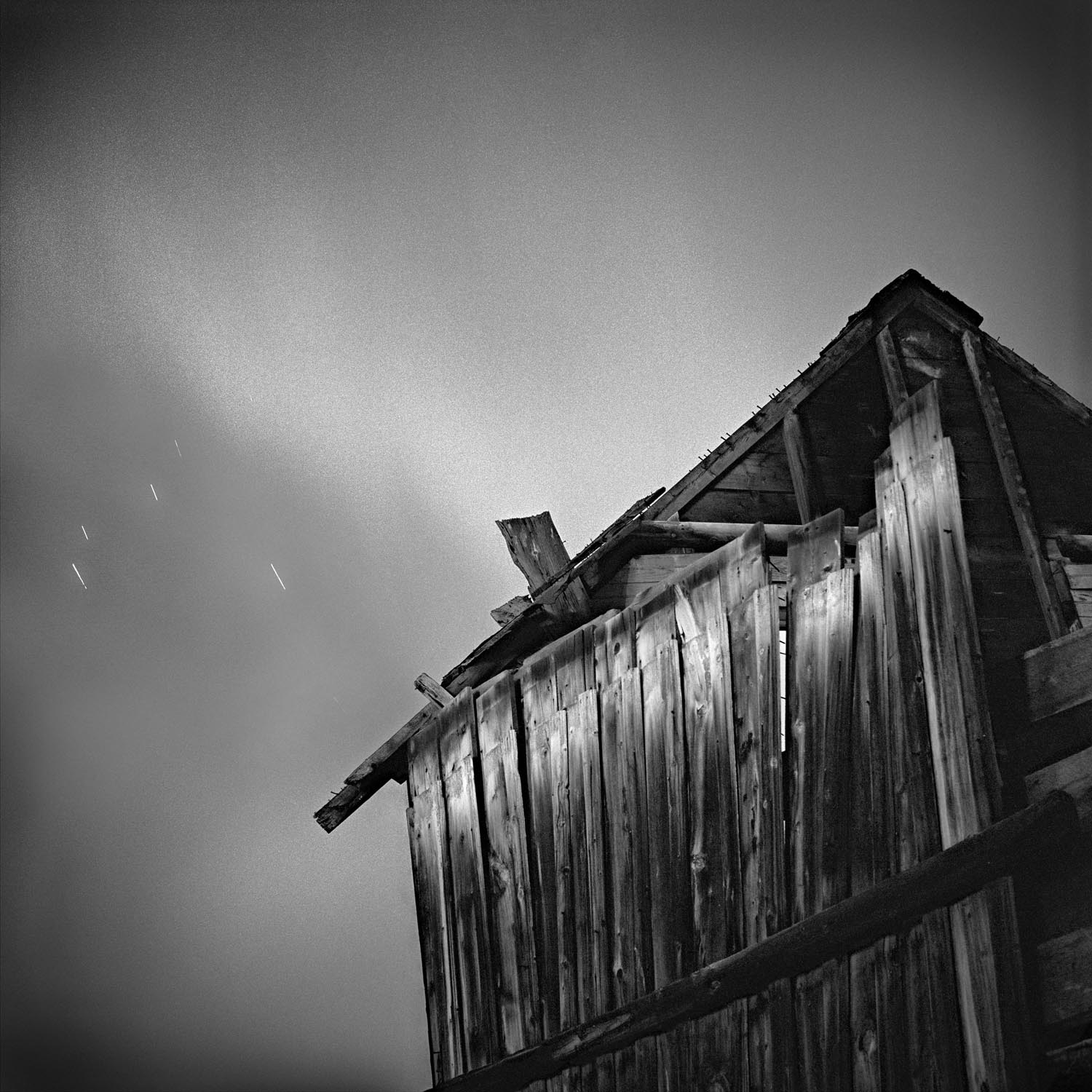
At first, I started to explore ghost towns along the front range. They were nearby, accessible, and allowed me to get my bearings. What may not be as obvious from the early images in the series is that I was shooting at night. It was the only free time I had. I could ballpark my exposure times and let the camera record light for quite some time. Minutes turned to hours. Long exposures uniquely record time and space in ways we don’t experience. I was hooked.

I slowly started to amass a small body of work. The collection of images started to seem cohesive―my loose definition of a project. At this point it was simply personal amusement, but not for long.

I had two experiences that were pivotal in shaping my understanding of the project:

The first experience was on wintery January day. I had obtained permission to enter the abandoned Paris Mill near Alma. What little research I had on the mill indicated it had an unusually large amount of original mining machinery―and, that it was literally infested with rats. I signed a waiver with the real estate company representing the mill releasing them from any personal liability on my part and on a snowy, January day I entered the mill.
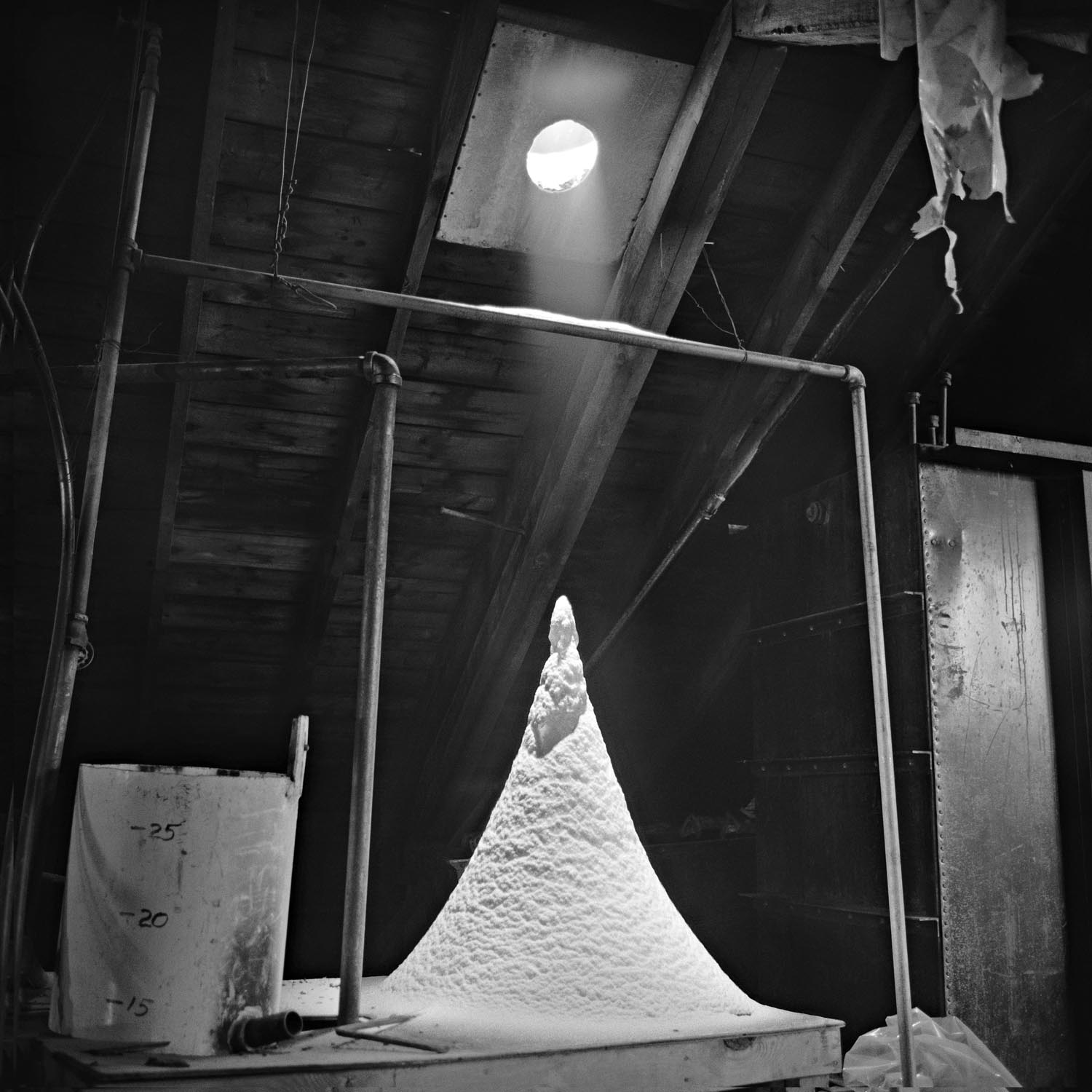
Now, my wife can tell you how unnerved I am just about mice. Frankly, they freak me out. Yet I had willingly stepped into a rat-infested mill. As a matter of personal safety, I’d never say I felt at ease, but as minutes became hours I slowly worked my way through the mill making images. Certain areas of the mill were very dark as the roof and walls were still intact. Other areas where the roof had collapsed became large labyrinths of light reflecting off structures, machinery and the snowfall. In one sense, I didn’t want to leave. In another sense, I couldn’t wait to be done.

This first experience at Paris Mill set the metaphorical backdrop for the next chapter in my life.

The second experience occurred in a much less “assuming” manner. It was a Saturday morning. I was at home. I was washing dishes. My three then-young kids were doing who knows what—washing the dishes was a momentary solitude from the busyness of parenting. My mind was wandering, thinking about my ghost town project. Like a lightning bolt, an epiphany, maybe even a warning: I had the most vivid impression. All I heard or saw in my mind was “THIS IS YOU! You are the ghost town.”

I was taken aback. Like what? But very quickly I kind-of understood. Despite how it sounds on paper, I didn’t perceive this as condemning. It was something deeper that was very personal to me after experiencing ghost towns. I was, unknowingly, on the verge of a very dark season in my life. This time, instead of willingly walking into the “mill,” I would be thrown in. The horrors would exceed my deepest fears. In many ways, this message was one of encouragement that I would inevitably need: “Above all else, guard your heart, for it is the wellspring of life.”

It was soon after this second experience that I named this project What Remains? The title has some obvious tie-ins with the subject matter. But the deeper meaning begs the question: “How’s your heart?”
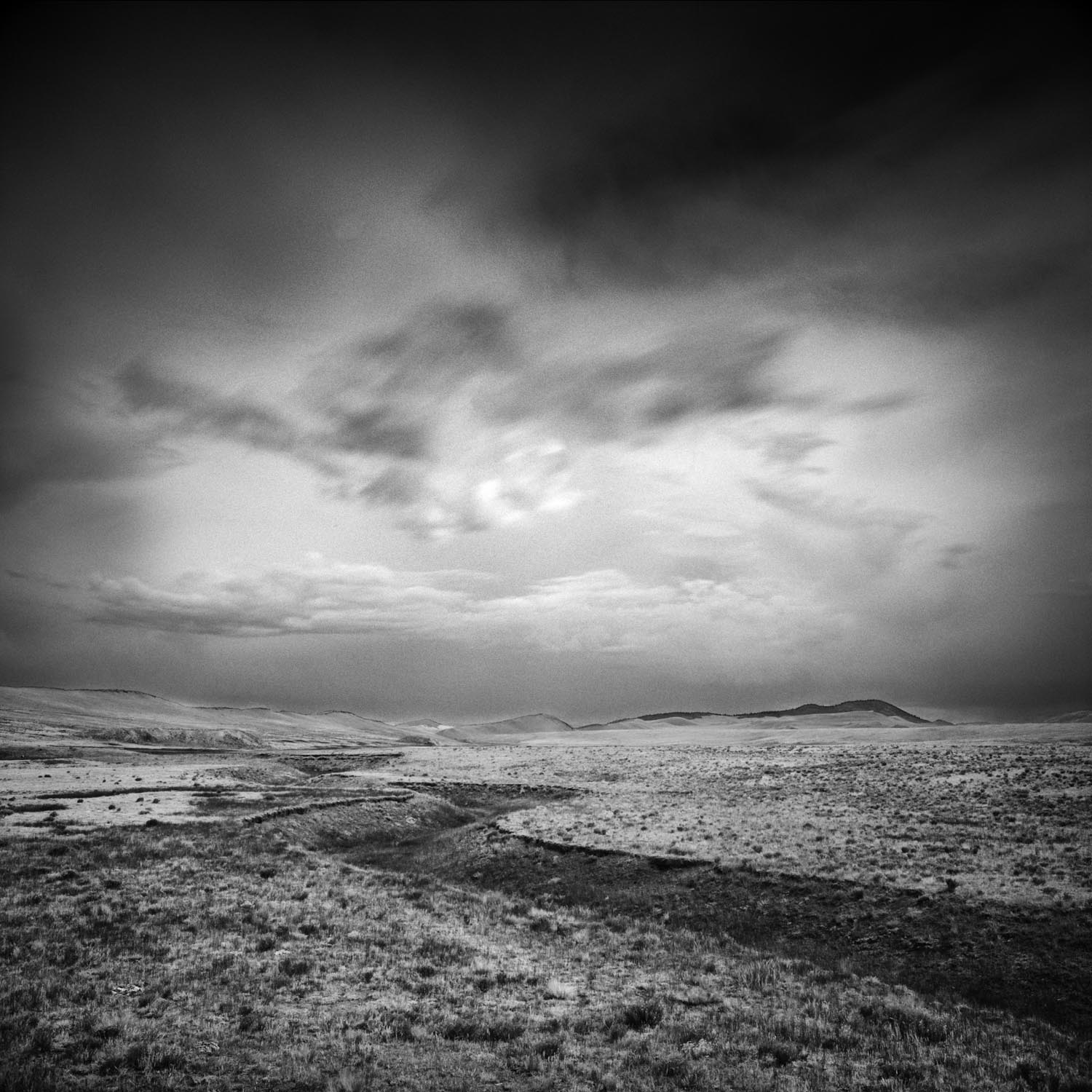
As I look back on this project, I have realized how fear provides an invitation and an opportunity. As I fearfully stepped into the Paris Mill years ago, I realized how addressing fear provides both and invitation and an opportunity to grow. Looking back, my fears were clear and present. But the opportunity provided me with a huge resilience to do the work that I felt convicted to do and produced some of my favorite images to date.

“For now we see in a mirror, dimly…” At that time, I could not know the circumstances and fears that would ensue in the years to follow. These are fears that only with God-given faith, can I walk into and through. I am still in this dark “mill” ―but not alone.

“but then face to face.” I believe He will one day, face to face, reveal the beauty only He can create through His redemption in ways I could otherwise never have known so personally.

See the complete series here. To see more of John’s work, visit johnforney.com


Advent is a season of twofold longing. First, we remember the longing of the world for the first coming of Jesus, the long-foretold Messiah who brought an easy yoke of gracious salvation and love to a weary world. Second, we look at our own world and long for its renewal at Jesus’ second coming. Things are not right here, but we can hear the Redeemer’s voice echoing everywhere. In particular, we can hear His voice in our core longings as a culture and as individuals—we long for justice, we hunger for relationships, we quest for spirituality, and we delight in beauty. None of these longings are fulfilled outside of Christ.

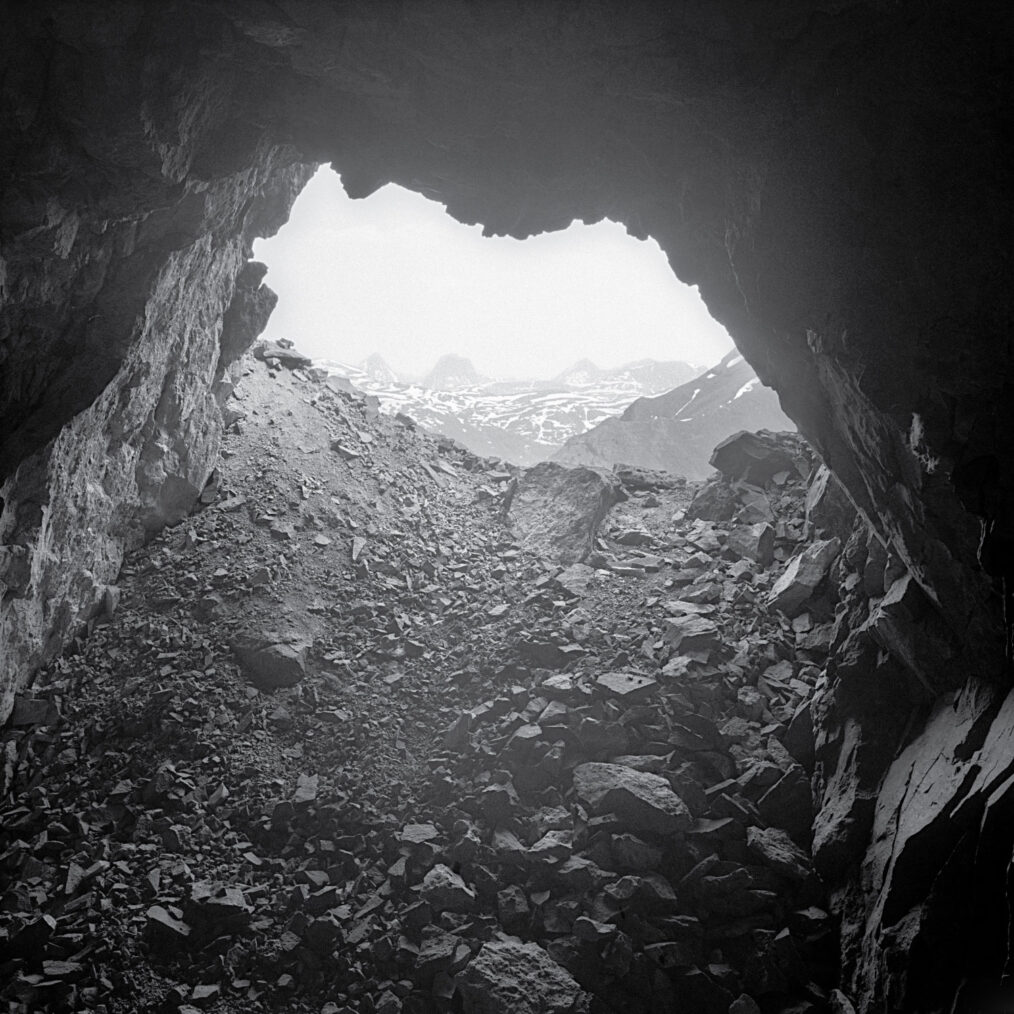
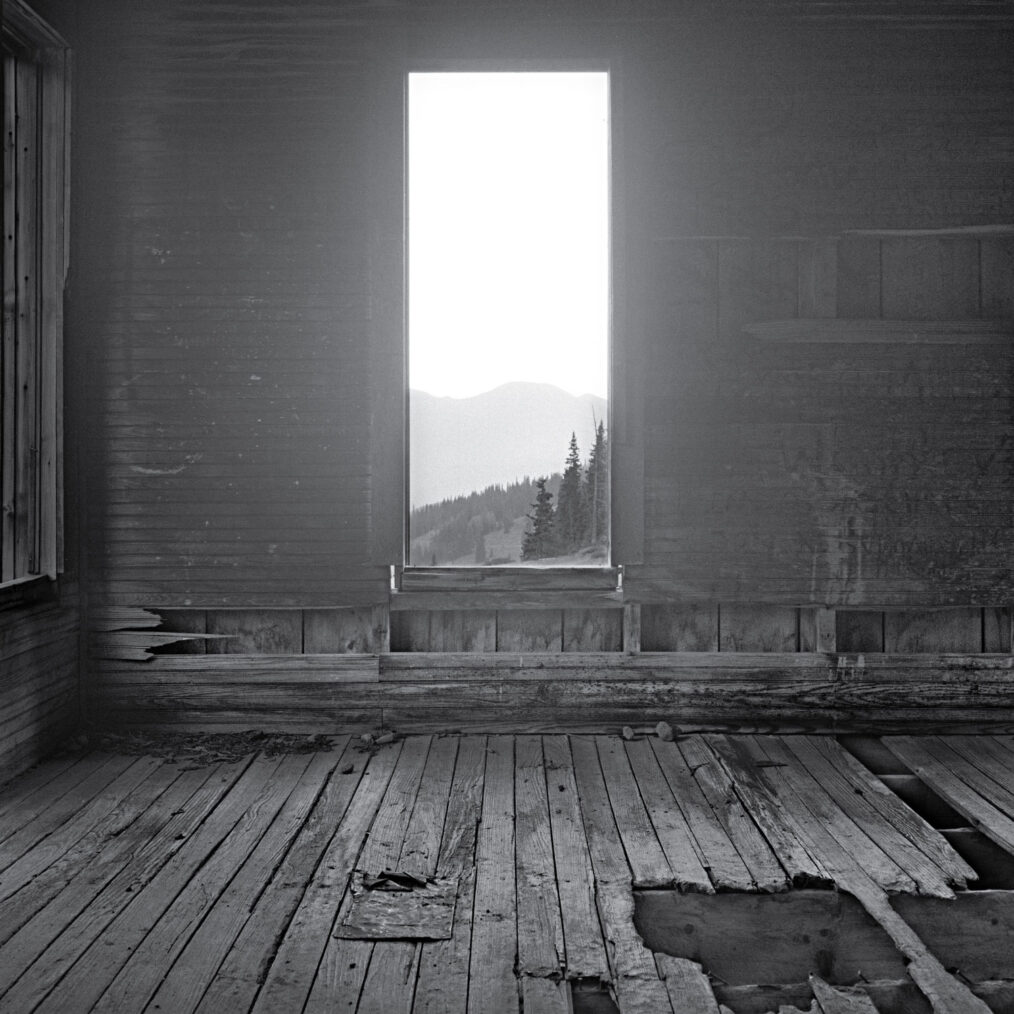
In John Forney’s What Remains? series, we see things and places and moments of transcendent beauty, all framed by brokenness and abandonment. These images speak both to haunting and to unspeakable beauty.

As John explained above, we now see “in a mirror, dimly.” We hear His voice glance off the mighty rocks and whisper across the confusing, empty expanses. In our brokenness, in our longing, and in our best efforts, we know all the better of the great glory beyond us. The Lord Jesus is the fulfillment of these longings, the antidote to our belligerent works-righteousness, and the kingdom of light and wholeness that we dream of on the tired earth.

As the weeks of Advent Progress, we’ll explain each individual piece here on our blog, sharing the images on Instagram. Here are direct links to the week’s we’ve covered so far:

Week One: Justice and the Cave Trail
Week Two: Relationships and the Old Tram
Week Three: Spirituality and the Mine Wall


Psalm 109—Artwork

Learn more about Christ in the Psalms weekly artwork and see previous pieces here.

Person: Benjamin Rogers

Benjamin Rogers is an instructor of Painting and Drawing at Red Rocks Community College. He received an MFA in painting from Arizona State University and his work has been published in New American Paintings, Create! Magazine, Fresh Paint Magazine and ArtVoices. He lives in Arvada with his wife Emma, and two children.

Piece: Acrylic Painting

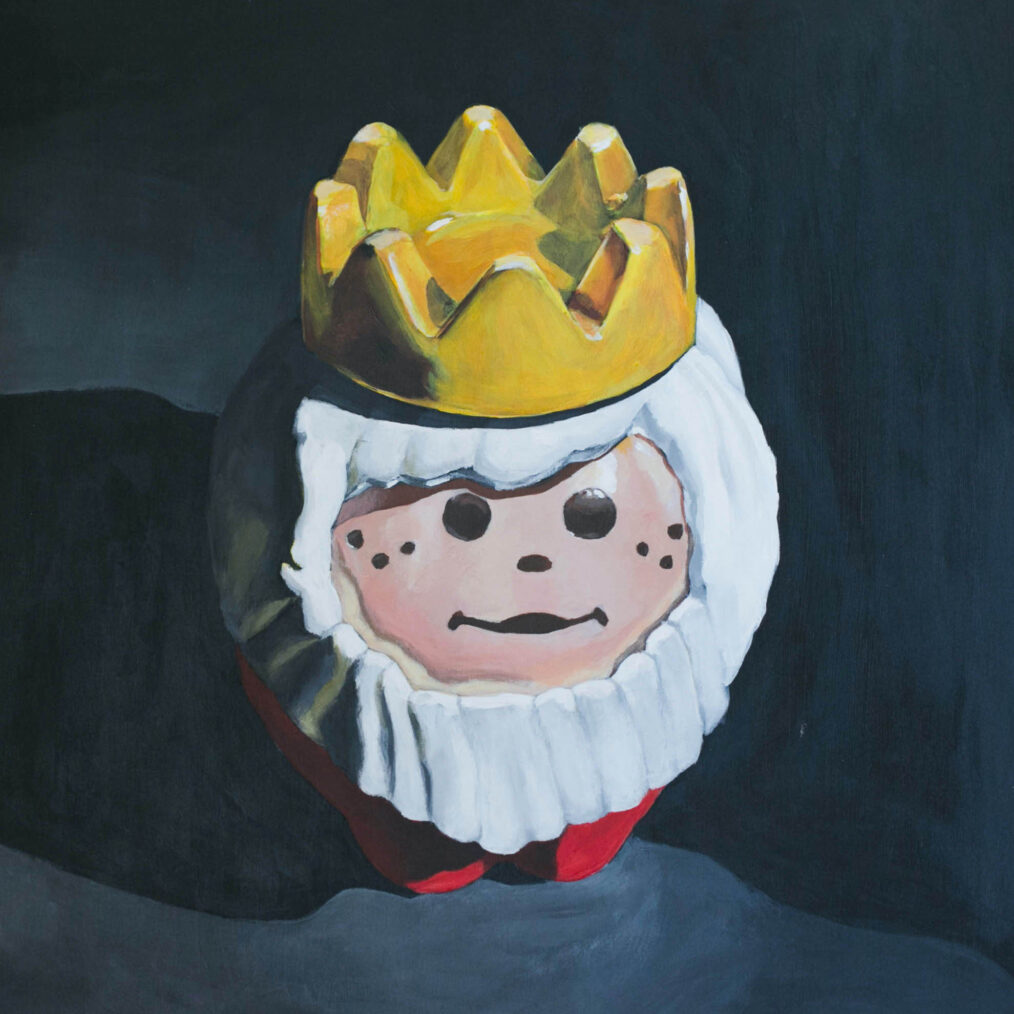
This piece examines King David in a place of darkness, doubt, loneliness and despair. I painted the piece in acrylic to emphasize the plastic nature of the Little Tike toy, which represents King David. He is seated on a black surface lit by a single light source. This psalm is a lamentation for the circumstances that David finds himself in, surrounded by wickedness and deceit. The black surrounding the toy in the painting illustrates the wickedness surrounding him and the evil that happening to him. The light source is symbolic of a source of hope in God, as the only means of restoration.

Psalm 108—Artwork

Learn more about Christ in the Psalms weekly artwork and see previous pieces here.

Person: Kari Langford

Kari, originally from Houston, is currently pursuing her BFA at the University of Denver. Growing up in a small waterfront town, she has always connected to God through the ocean. Nature is an important means to relate to God and the people around her. She has recently been exploring color, light, and form in her paintings, as well as performance and ceramic work.

Piece: Oil Painting

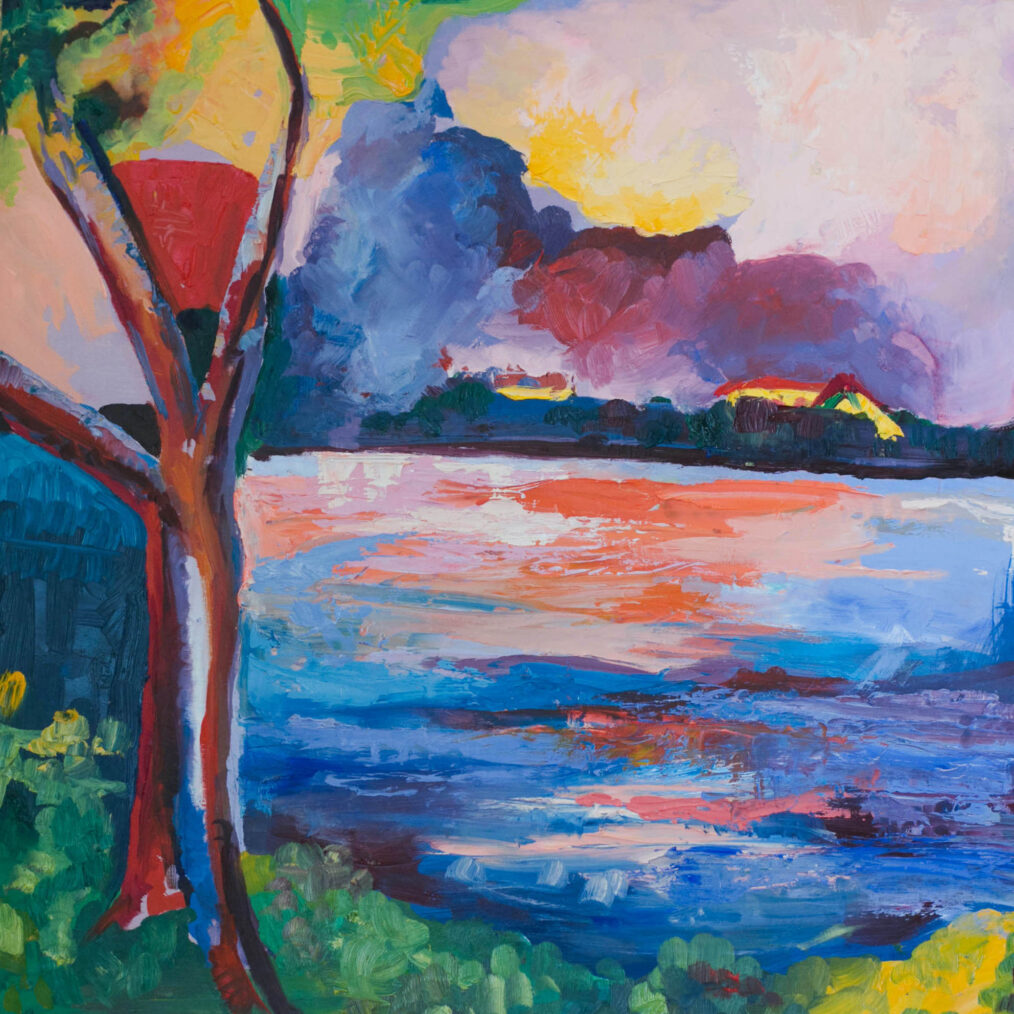
The last couple of months have been hard. They are unprecedented and difficult times that have caused an aching and longing in my soul for God to restore. All the day long, I cry out for the Lord to redeem this land, to wipe away the tears.

In the midst of this season, I have been home in Texas; I have once again returned to the water and greenery of a Texas landscape. So many times, I have woken up in the morning to look out the window and see warm, beautiful hues of greens and yellows. This time has forced me to slow down and look around—as if the Lord was calling me to “Awake!”

While I have been spending time in Psalm 108, I have been reminded of the Lord’s goodness. Great is the Lord, and greatly to be praised.

My heart is steadfast, O God!
I will sing and make melody with all my being!
Awake, O harp and lyre!
I will awake the dawn!
I will give thanks to You, O Lord, among the peoples;
I will sing praises to You among the nations.
For Your steadfast love is great above the heavens;
Your faithfulness reaches to the clouds.
(Psalm 108:1–4)

I was struck by this image of worshiping with all of my being, with awaking the dawn with praise. In response to this, I woke up at 5am, went to the neighborhood dock, and greeted the dawn with praise for our holy God. The clouds and the sun and the water and the trees, all point us to the Creator. They show us glimpses of His steadfast love—of His faithfulness—that reaches beyond the things we can see.

My prayer is that in the midst of sorrow, we can rejoice in who God is, and that one may look upon this burst of color and light and be moved to praise our incomprehensible God.

Psalm 107—Artwork

Learn more about Christ in the Psalms weekly artwork and see previous pieces here.

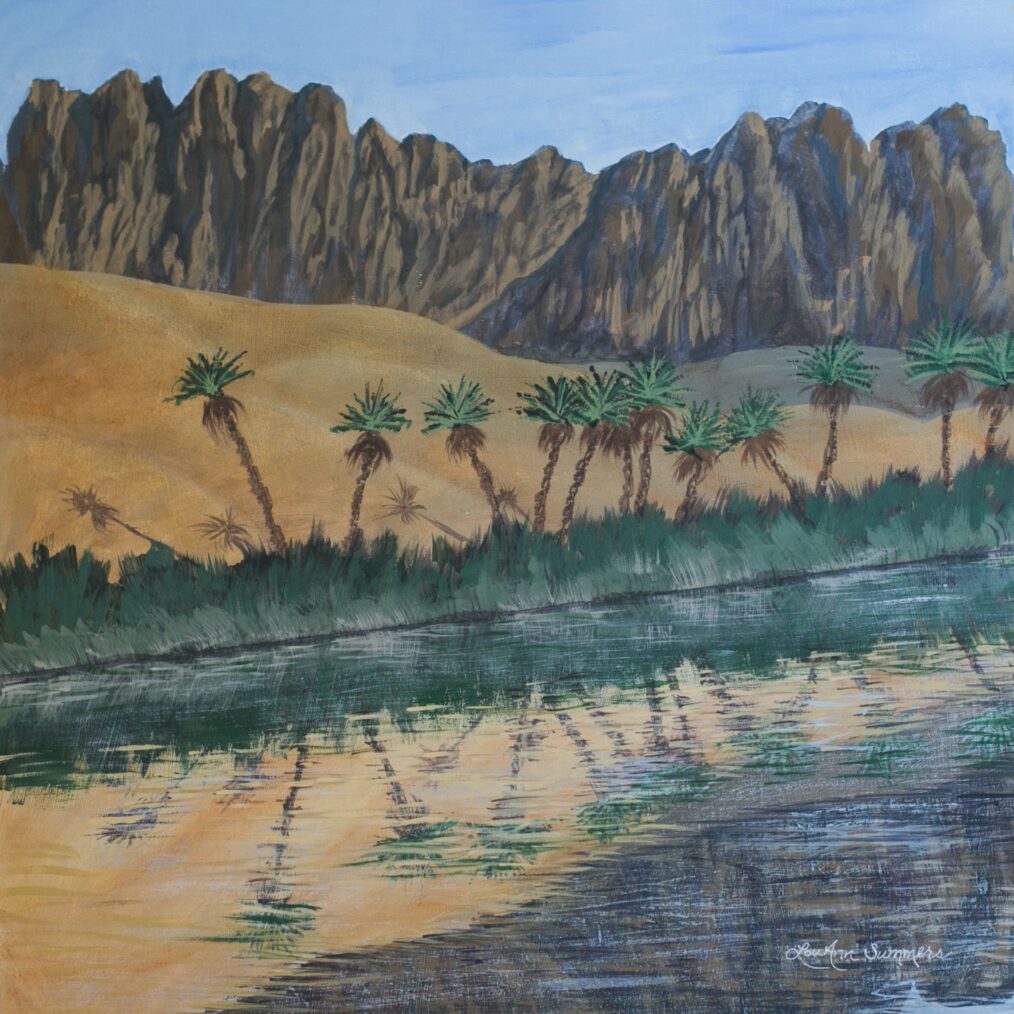
Person: Lou Ann Summers

My name is Lou Ann Summers. I grew up in Littleton, Colorado and since then have lived in Missouri, Texas, New Mexico, and Utah. We have now been in Arvada for five years. I have been married to Brent going on 38 years and am a mother of four and a grandmother of six. I come from a very artistic family, a few of whom are professionals. It was not until adulthood that I discovered a knack for painting. I am an amateur artist and make art for the sheer joy of it. I was fortunate to have the chance to teach art to sixth graders for five years in public school.

Piece: Acrylic

Being in my 60s, I have had the opportunity to practice my artistry plenty, and like they say, practice makes perfect. Haha! Not that I’m perfect! but that I have had plenty of practice. I never went to school for it. My sister became a professional artist and because i grew up beside her, I absorbed much of her eye for color, light and shapes. As children she and I had a drawing game we would play together in church while we were listening quietly. In later years we would paint together as she instructed me. I have also enjoyed watching painters on TV, learning much from them. I feel God’s joy when I am creating!

This particular piece was inspired from Psalm 107. It speaks repeatedly of the people crying out and God providing for, and saving them. V.35 says, “He turned the desert into pools of water and the parched ground into flowing springs, there He brought the hungry to live and they founded a city where they could settle.”—an oasis in the middle of dry sand! Like our children cannot stay out of the water in the summertime, I cannot live without his living water! I can’t count the number of heart-scorching times during “Covid” where I have had to run to the fountain of life to drink, or die. And He offers me an oasis of water where my heart can settle 🙂

Psalm 106—Artwork

Learn more about Christ in the Psalms weekly artwork and see previous pieces here.

Person: Nikki Rasmussen

Nikki Rasmussen is a Colorado-raised artist and designer who graduated with a BFA from the Rocky Mountain College of Art and Design in 2014. She has been drawing since she could hold a crayon and has always found visual art to be key to her self expression and identity. She currently lives in the Boulder area with a big dopey dog and two goofy little cats where she continues to create regularly and thrives off that beautiful mountain view.

Piece: Digital Design

Many times He delivered them,
but they were rebellious in their purposes
and were brought low through their iniquity.
Nevertheless, He looked upon their distress,
when He heard their cry.
For their sake He remembered His covenant,
and relented according to the abundance of His steadfast love.
(Psalm 106:43–45)

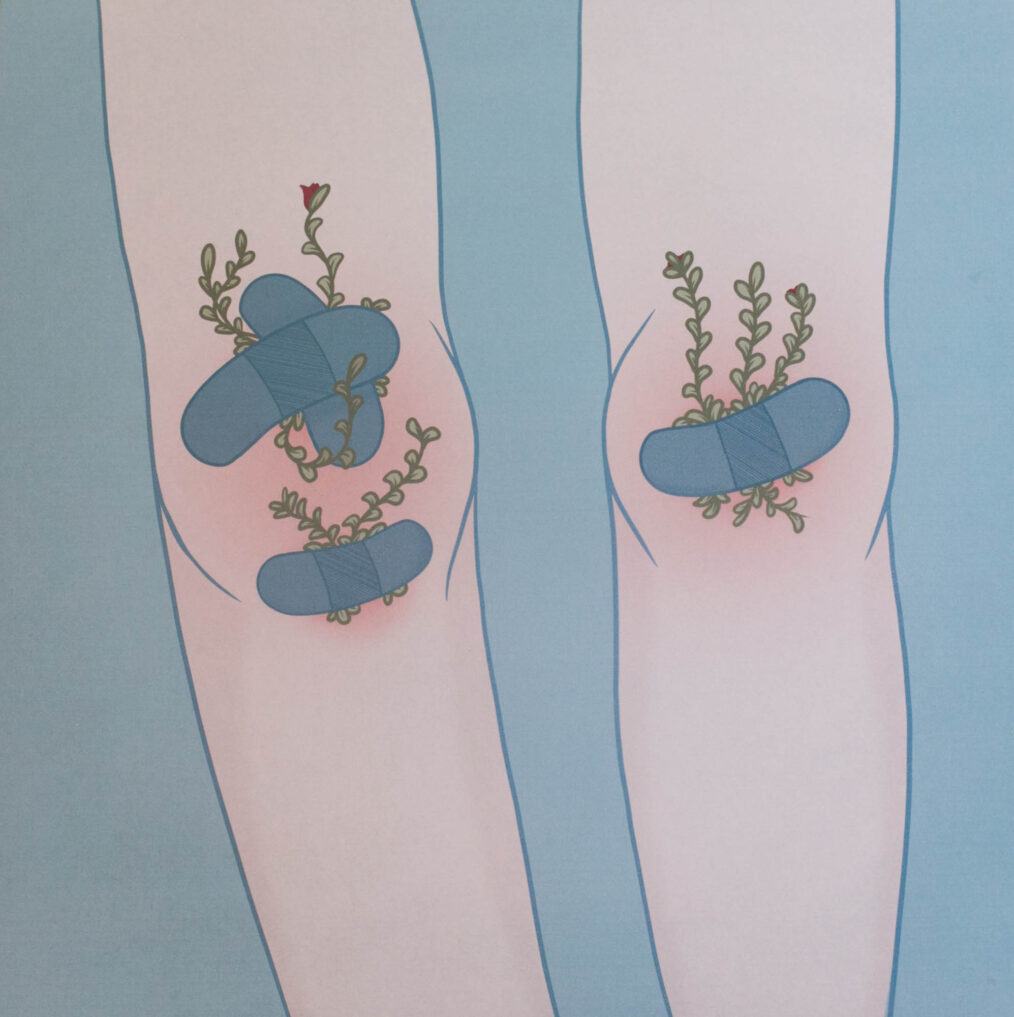
It’s always striking to me how patient and forgiving a father our God is. To look back through human history is to review a long succession of sin; we push God away, disobey Him, allow the enemy to seep into our very culture and establish “norms” that are toxic and painful and that go against all that God had intended for us. We get a clear perspective of this is Psalm 106 as the psalmist lists out all that God’s people have done and yet, in spite of it all, God remembers His covenant. Every time we trip and fall, God the Father is there to pick us up and bandage our wounds so that we can continue on, learning from our mistakes and using them to grow more into the people He intended us to be.

I chose to focus this image not on the falling or the lifting up, but rather on the wounds now covered by God. Sin is shameful and scary, but we can wear these bandages with immense gratitude knowing that they came from God and that from them we will experience growth we might not have even known we needed.

Psalm 105—Artwork

Learn more about Christ in the Psalms weekly artwork and see previous pieces here.

Person: Daniela Lozano

Hi, my name is Daniela Lozano. I grew up as a missionary kid in Costa Rica and Guatemala. I went to the Air Force Academy and served in aviation in the Air Force for 7 years, during which I deployed twice. I currently serve people as an Optometrist and take care of their eye care needs. I love art, hiking, cycling, and snowboarding. And I love bringing my fur-baby, Snoopy, to the dog park.

Piece: Watercolor

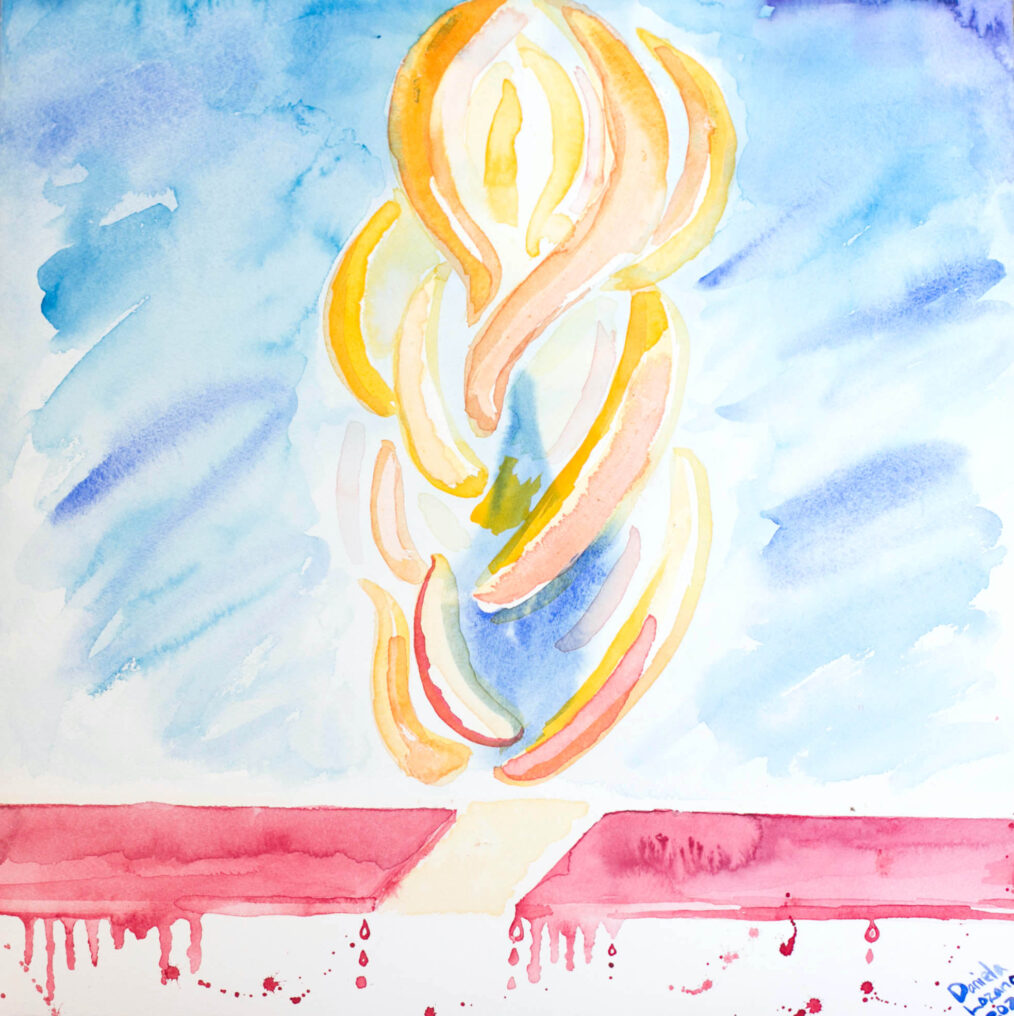
My piece, “The Covenant,” is in watercolors and is inspired by Psalm 105. It also captures the symbols of God’s Old Testament covenant: God moving through the halves of a burnt offering.

Art is very therapeutic for me. In this case, I was upset about impending Memorial Day at the time of the painting. It’s always a difficult holiday for me because it honors service men and women that were lost in combat. Having been in war, the pain of their loss is real to me. But, God’s covenant is also very real, and it reminds me that HE will never leave or forsake His children. We are always in a better place if we’re in His will.

Psalm 104—Artwork

Learn more about Christ in the Psalms weekly artwork and see previous pieces here.

Person: John Forney

I came out to Colorado 20 years ago and have been here ever since. My wife, Veronica, and I have a blended family and are blessed with five kids. I’m a self-taught black and white photographer shooting with old school 8×10 large format and medium format cameras.

Piece: Black and White Photography

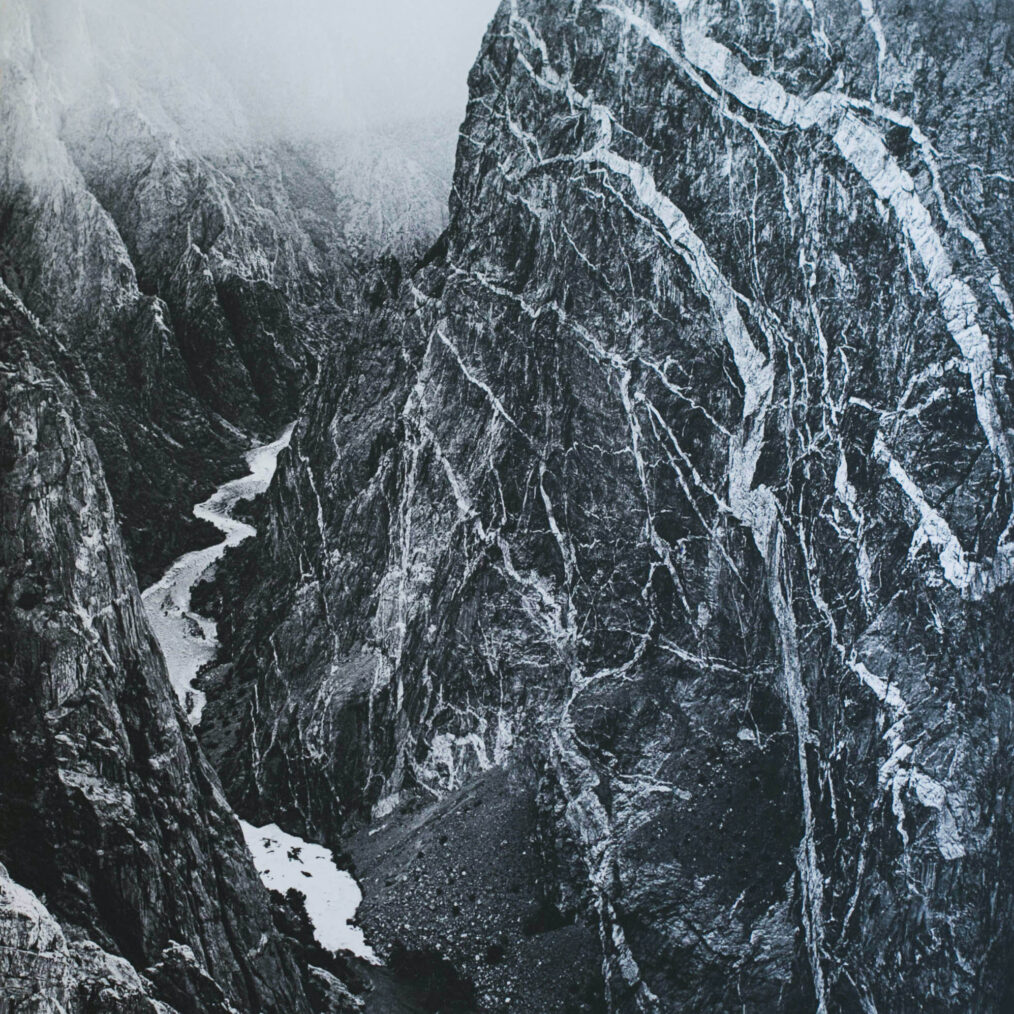
From a young age, my experiences out exploring and camping in northern Minnesota lit a fire in me that has never gone away. Photography has always been a means for me to slow down, be present, and share my love of God’s wonderful creation with my family. This image was shot over 10 years ago when I was camping with my four oldest kids along the rim of the Black Canyon of the Gunnison. The negative has always been one of my favorites but as time went on, I always printed more recent images. While reading Psalm 104, It seems impossible not to be caught up in euphoria along with the Psalmist as he praises the Lord’s “splendor and majesty.” I still recall being in awe as I looked out at this scene years ago. Experiencing the sheer heights and the depths on the edge of that rim coupled with the approaching rain backlit by the sun moving through the canyon. It was awesome. The psalmist illustrates God’s providence: He stretched out the heavens, makes the clouds His chariot, set the earth on its immovable foundations, and rebuked the waters so that they will never again cover the earth. He is totally in control. There is a place and purpose for all creation, and “the earth is satisfied by the fruit of His work (v.13).” He is the Provider. “In wisdom You made them all (v.24)” and all creation looks to Him for food (v.27), satisfaction (v.28) and life (v.29). The psalmist gives us a recounting of the perfectly-created world, yet does not overlook the sin and wickedness that will be consumed and be no more (v.35). I look back on that camping trip over 10 years ago. Never in my wildest dreams could I have envisioned the brokenness that would ensue in my family’s life since then. This image helps remind me to reflect on His promise that our present sufferings can not compare the future glory that awaits us. He is our hope. Praise God.

Psalm 103—Artwork

Learn more about Christ in the Psalms weekly artwork and see previous pieces here.

Person: Beth Dreyer

I am a Chicago-raised transplant that has been living in Denver for seven years. I graduated from Creighton University in Omaha, Nebraska with a B.F.A. in Studio Art and have been teaching elementary art in the public school system for nine years. I have been married to my husband, Adam Dreyer, for 6 years, and am a mom of a busy (almost) three-year old, Ramona, and a 4-month old, Nolan. I am a lover of the outdoors and feel most myself when I meet with God in the midst of His beautiful creation (with the people I love most, of course!).

Piece: Acrylic & Ink

In Psalm 103, David praises God specifically for His goodness and faithfulness in response to creation. Throughout the psalm, many characteristics and actions of God stick out—“forgives,” “heals,” “redeems,” “satisfies,” “justice,” “merciful,” “slow to anger,” and “compassion.” God is worthy of all praise! Our God loves us tangibly and fully. We can rest in Him, knowing that in love, He forgives sin and heals us from sin’s devastating effects on our lives (v.3), brings good out of evil (v.4-5), and ultimately will bring justice as He fights for us (v.6-7). In verse 13, God is referenced as a father, “As a father shows compassion to his children, so the Lord shows compassion to those who fear Him.” To me, the image of God as “Father”‘ is one of the most beautiful. As someone who did not have the best relationship with their earthly father, Psalm 103 is a reminder that our Father in Heaven knows us to our core (v.13-14) and that He wants us to know Him deeply in return.

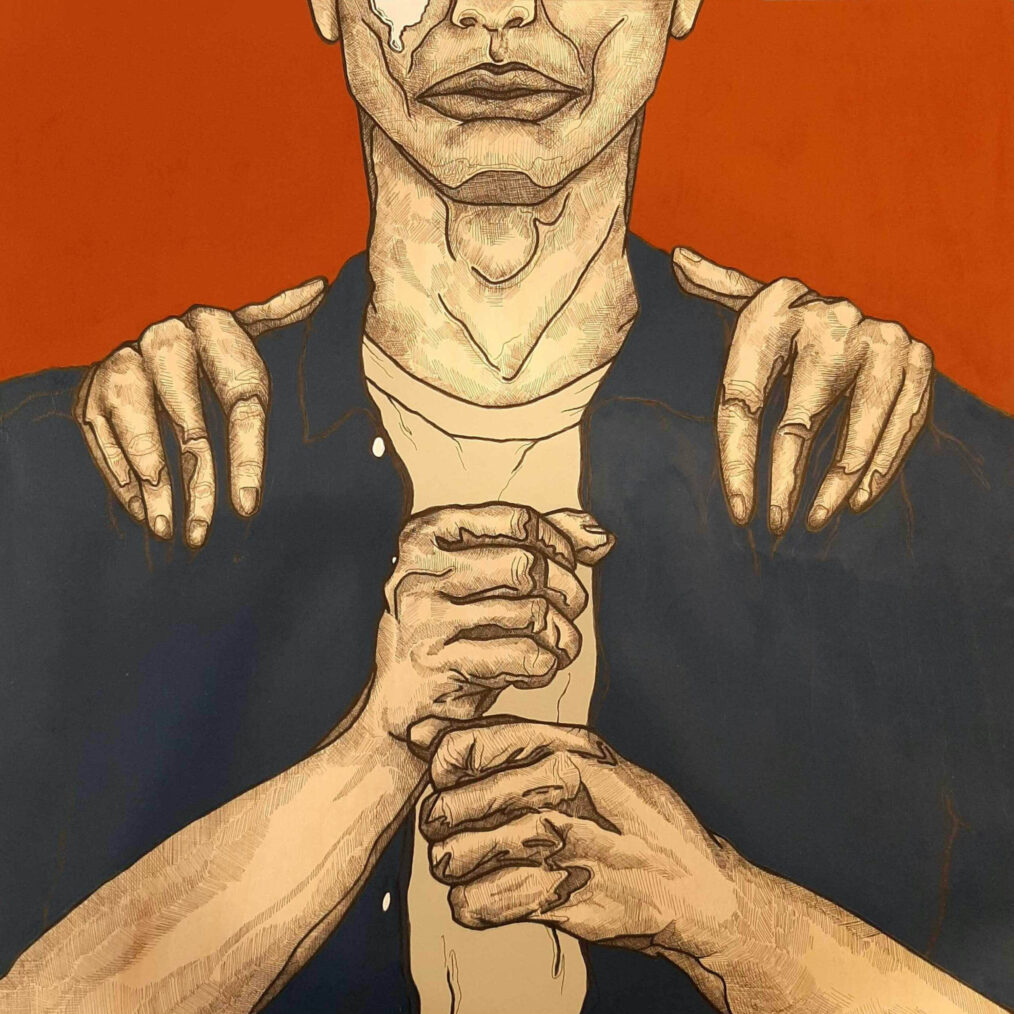
This painting first focuses on the brokenness of the world—the reality of man’s sinful desire to grasp and hold onto the things we think are important. These things are but dust and hold no weight in the Kingdom of Heaven (v.15-16). The hands on the shoulders are a symbol of the Lord’s compassion toward us as our Father and the gentle discipline for His children when we sin and attempt to find satisfaction in things of this world. As believers, we can instead rest in our covenant relationship with the Lord through the work of Jesus. Praise God for knowing us! Praise God for not dealing with us according to our sins (v.10)! Praise God for His benefits! Praise God for forgiveness, restoration, and peace!

Psalm 102—Artwork

Learn more about Christ in the Psalms weekly artwork and see previous pieces here.

Person: Margie Keith

I’ve been in Denver since the summer of 2018. I was born and raised in Southern Vermont, but I have a wanderer’s heart, and have lived all over the continental US and traveled extensively overseas. I have the honor and privilege of being the office manager here at Park Church.

Piece: Acrylic

The center of the piece was done with brushes not much thicker than a toothpick, and the outer blackness was done with my fingers. It took around 6 hours to complete the painting itself, not including prepping the wood and sealing the completed piece.

The caption of the Psalm, in the ESV translation, is “A prayer of one afflicted, when he is faint and pours out his complaints before the Lord.” As I was studying this Psalm, I was struck by the sense of darkness and sorrow surrounding the author. The words smoke, ashes, shadow, waste places, wilderness, and withered are used to describe his state. It conveys a deep sense of sorrow, heaviness of heart, emotional desolation. I love the Psalms because they do not shy away from grief and trial, nor do they encourage us to search for the silver lining, and though there are 150 of them, you will not find the words “well, at least…” anywhere at all. The Psalms are where you can sit with sorrow as with a friend, a familiar (if unwanted) companion whom you know quite well. It’s apt for me that this Psalm is being taught on Father’s Day. My dad died suddenly when I was 10, and Father’s Day has always been for me a day of lament, a day of missing him desperately, wondering what my life would have looked like with him in it. Whether you’ve experienced major grief such as the loss of a loved one, or many micro-griefs, such as losing a job, losing friendships, having to walk away from a dream you’ve always had or a wrestling with a dream that’s unfulfilled, fighting illness or infertility, lingering wounds that have been inflicted on you by others… whatever your shadow is, this Psalm reminds us that we’re not alone there. God is not afraid of our pain, and is not uncomfortable with dark places.

In Matthew Henry’s commentary on Psalm 102, he says this:

When our state is afflicted, and our spirits are overwhelmed, it is our duty and interest to pray, and by prayer to pour out our complaints before the Lord, which intimates the leave God gives us to be free with him and the liberty of speech we have before him, as well as liberty of access to him; it intimates also what an ease it is to an afflicted spirit to unburden itself by a humble representation of its grievances and griefs.

The beauty of our faith is that God is still good, and still loving, and still willing and able to rescue and succor us, no matter what darkness we are surrounded by. He wants us to cry out to Him. Darkness is not an absence of God’s presence with us, but rather an invitation for us to draw closer to Him. “He regards the prayer of the destitute, and does not despise their prayer” (v. 17). He has not left you alone! He is at work even now, sharpening and refining and mending you.

“Let this be recorded for a generation to come, so that a people yet to be created {that’s us} may praise the Lord: that He looked down from His holy height; from heaven the Lord looked at the earth, to hear the groans of the prisoners, to set free those who were doomed to die” (v. 18–20).

This Psalm embraces pain. It does not minimize or negate our suffering. Our American culture tends to shy away from pain and discomfort, and will often take extreme measures to avoid it. We as Christ followers need to learn to lean into that pain, to learn from it, to greet it like a companion we aren’t frightened by because we know it so well. We have no need to be afraid of sorrow because—and this is the important part—it begins in darkness but it does not remain there forever. We have hope, we have a source of light and goodness that cannot be dimmed. “In Him was life, and that life was the light of all mankind. The light shines in the darkness, and the darkness has not overcome it” (John 1:4–5, emphasis mine). In this painting, you see an idyllic meadow with sheep grazing, flowers blooming, and mountains shining in the distance. It is a place of peace and safety, and even though it’s surrounded by swirling dark clouds, the darkness cannot cover it. We are His sheep, and though we will fade like wildflowers, He is mindful of us. His faithfulness endures like the mighty mountains, and His love reaches to the heavens. We can mourn freely, knowing He is our help, and that He will never let the darkness take us. He is our safety and shelter, our peace in the midst of the storm.